


PART 2 · PROFESSIONAL ETHICS
Lesson 2. Professional ethics in project management
Reading time ≈ 20 min · Based on Chapter 2 of the book
Take benevolence as grace, righteousness as reason, propriety as conduct,
and music as joy; the kind and humane are called noble.
— Zhuangzi
| LEARNING OBJECTIVES
After this lesson you will be able to: • Distinguish universal ethical and unethical concepts in the project environment. • Explain the definition and practice of responsibility, respect, fairness and integrity. • Use “intelligent disobedience” with sound grounds when facing a wrong instruction. • Recognise common ethical situations: “envelope culture”, dishonest reporting, shortcutting legal procedures. |
On projects we often ask ourselves: was the way I acted, or the decision I made, ethical in that situation? Did I look at the problem from many angles, or assume I owned the “truth”? This lesson lays the foundation for answering.
What does ethics mean in project work?
To live and work ethically, we first need to tell ethical concepts apart from unethical ones. Fortunately, humanity broadly agrees on them:
| Ethical concepts
Honesty, integrity, trustworthiness, impartiality, fairness, altruism, respect, courtesy, kindness, selflessness, incorruptibility, sympathy, compassion, understanding. |
Unethical concepts
Deceit, cunning, dishonesty, prejudice, injustice, cruelty, rudeness, selfishness, greed, callousness, stubbornness. |
Among these, four values are widely recognised and applied in the project management profession: responsibility, respect, fairness and integrity.
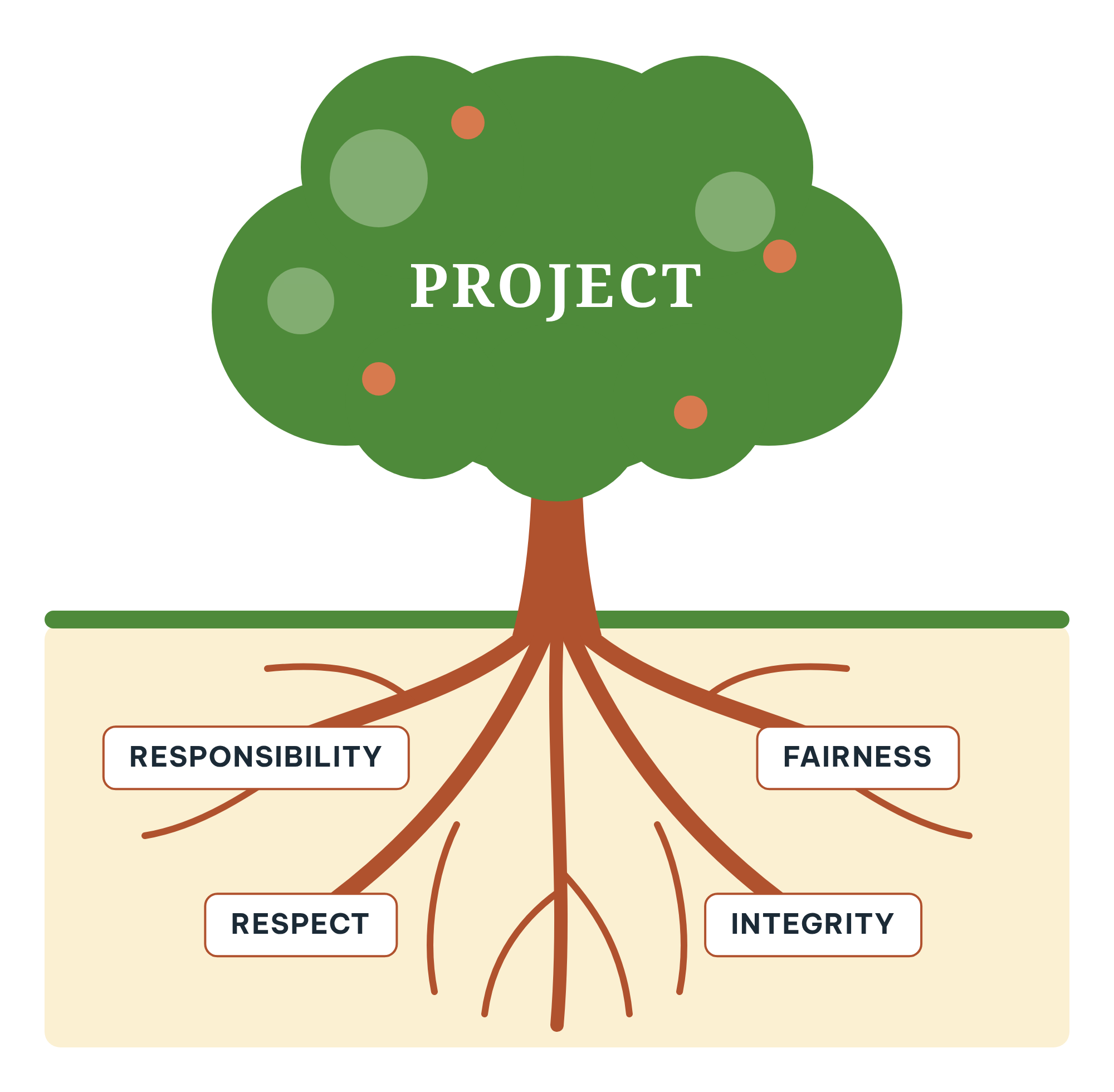
Figure 2.1. The four ethical qualities are the roots that nourish the project tree.
Responsibility
| DEFINITION
Responsibility means willingly accepting the consequences of the decisions we make and the actions we take. It also means accepting the consequences of what we should have done for the benefit of the project or organisation, within our ability and means, but did not do. |
| STORY
The carpenter and his last house An old carpenter who had served a builder faithfully for many years asked to retire. The firm asked him to build one last house. Knowing he was leaving, he worked carelessly, using poor materials and caring only for appearances. When the house was finished, the owner handed him the key: the house was his reward. From then on he had to live in a house that only he knew was badly built. |
Responsibility takes many forms on a project:
- Owning mistakes. In a technical negotiation for an energy project, when the Vietnamese side pointed out errors in the bid, the Japanese head of delegation apologised at once; then every member of the Japanese team stood and bowed to acknowledge the mistakes in their tender.
- Doing one’s own job without overstepping. Not straying into other people’s specialisms with subjective judgements that lack data and logic.
- Knowing and obeying the law. Infrastructure and energy projects often face pressure on schedule or to pick a “named” contractor. Skipping procedures to take shortcuts leaves legal liability later.
Following instructions brings peace for now; following the law brings peace for life.
| STORY
The lesson worth a thousand taels of gold A king paid a thousand taels of gold for a lesson of one sentence: “Before doing anything, first consider its consequences carefully.” At first he was furious; later he saw its wisdom and had it carved on everything he used. When a bribed court physician prepared poison, he saw the sentence carved on the king’s cup, thought of the consequences and confessed. The plot was foiled. |
Respect
| DEFINITION
Respect means having self-respect, knowing our own dignity, and honouring our obligations to the project, the organisation, the environment and society. |
| STORY
The Messiah among us A monastery was in decline. A visiting rabbi said only: “The Messiah is among you.” The monks began to see each other differently: perhaps behind silence lay wisdom, behind chatter a gift for cheering others. They treated one another with deep respect, and the whole monastery came back to life. |
In 1948, President Hồ Chí Minh’s secretary Vũ Kỳ confided that the service staff often snapped at each other. Hồ Chí Minh replied that in all their years working together the two of them had never raised their voices, because “I respect you and you respect me.” Using the image of a birthday cake eaten on a full stomach, he concluded that criticism and self-criticism, too, must come at the right time, in the right way, and with mutual respect.
On projects, respect shows in:
- Kindness and sincerity; listening and understanding other people’s views.
- Not using one’s position to sway others’ decisions for personal gain; not misusing the money, assets or staff entrusted to us.
- Learning the norms and customs of partners; avoiding prejudice and cultural stereotypes.
- Handling disagreements directly, frankly and in good faith; not letting small matters and prejudice tangle the situation.
- Above all, self-respect: valuing one’s own honour, character and conduct.
Fairness
| DEFINITION
Fairness means making decisions and acting justly and objectively, with behaviour not driven by self-interest, prejudice or favouritism. |
| STORY
Tô Hiến Thành recommends the worthy When the Lý dynasty statesman Tô Hiến Thành lay gravely ill, the official Vũ Tán Đường nursed him day and night, while Trần Trung Tá was too busy to visit. The Queen Mother asked who could replace him. He named Trần Trung Tá. Surprised, she asked about Tán Đường. He replied: if you ask who should nurse me, there is none but Tán Đường; but if you ask who should carry the nation’s affairs, it must be Trung Tá. |
Fairness on projects means:
- Transparency in decision-making; disclosing any conflict of interest to the parties involved.
- Not hiring or firing, rewarding or punishing, awarding or refusing contracts on personal calculation, favouritism, cover-ups or bribes.
- Distinguishing cultural gifts (a book, a painting, a local speciality) from “envelope culture”.
| SAY NO TO “ENVELOPE CULTURE”
Cash “envelopes” slowly numb our resistance and rob us of impartiality. Refusing them is hard because in many places they have become “custom”. We can only do it when we recognise the “disease of greed” in each of us, know what is enough, keep our sense of shame and live with integrity. |
Integrity
| DEFINITION
Integrity is our duty to be honest at all times, to understand and respect the truth, value honour, keep our promises, match words with deeds, do what is right and keep doing it, and act consistently with universal values and ethical norms. |
Under King Trần Duệ Tông, the royal consort Nguyễn Thị Bích Châu presented the Ten Policies at Cock-crow (Kê minh thập sách), several of which still speak to national projects today: “Restrain those who abuse power, to rid the nation of its termites”; “Seek frank counsel so the road of speech is open as a city gate”; “Choose generals for their strategic skill before their family standing.”
Intelligent disobedience
| CONCEPT
Intelligent disobedience means declining to follow authority for good reason, by questioning the legitimacy of decisions leaders make when choosing or directing projects. |
Guide dogs are trained in this skill: if a blind owner commands them to cross while cars are passing, they refuse. On projects, intelligent disobedience helps organisations avoid wrong investments or harmful decisions, for example when:
- A leader imposes a contractor that lacks capability and experience.
- An infeasible milestone is imposed, neglecting quality and benefits.
- A decision conflicts with professional ethics.
To say “no” effectively, a project director needs critical thinking, presents the case with data and facts, stays sensitive to others’ views, and builds a coalition behind the sound argument.
Honesty in reporting
| CASE
Two months late, “suddenly”, in month 20 An industrial project ran for two years. For 19 months the contractor reported “on schedule, issues under control”. In month 20, with four months to go, it reported a two-month delay and blamed external causes. However willing the parties were, the contractual milestones could no longer be recovered. |
Similarly, some contractors commit to full compliance with the tender documents, then raise deviations or ignore requirements after signing. If the owner responds with “peace at any price”, the project’s objectives and benefits pay the cost.
Apply it to your project
| SELF-CHECK BEFORE AN IMPORTANT DECISION
☐ Responsibility: Have I weighed the consequences of this decision, including legal ones? ☐ Respect: Have I listened to those affected and those who disagree? ☐ Fairness: Do I have any personal interest or relationship involved? Have I disclosed it? ☐ Integrity: Am I ready to explain this decision openly, with real data? ☐ Intelligent disobedience: If this instruction is wrong, do I have the data, argument and allies to object? |
Reflection questions
| FOR INDIVIDUAL REFLECTION OR GROUP DISCUSSION
1. Have you faced the choice “following instructions brings peace today, following the law brings peace for life”? What did you choose? 2. Which of the four values is hardest for you to uphold in your current workplace? Why? 3. If you had to say “no” to a senior decision, what data and allies would you prepare? |
Quick check
Question 1. According to the lesson’s definition, responsibility includes:
- Only the consequences of what we have done
- The consequences of what we did and of what we should have done but did not
- Only duties written in the contract
- Only tasks assigned by superiors
Question 2. The story of Tô Hiến Thành recommending Trần Trung Tá illustrates which value?
- Responsibility
- Respect
- Fairness
- Intelligent disobedience
Question 3. Which situation calls for “intelligent disobedience”?
- Disliking your manager’s dress style
- A leader imposes an infeasible milestone that neglects quality
- Wanting to switch to more familiar software
- Not liking a teammate
Question 4. The contractor that reported “on schedule” for 19 months then announced a 2-month delay in month 20 is a lesson about:
- Honesty in communication and reporting
- Scheduling technique
- Cross-cultural conduct
- Cost management
Answers and explanations
Question 1: B. Responsibility includes consequences of things that would benefit the project, within our means, that we failed to do.
Question 2: C. He recommended the most capable person for the nation, not the one who had done him personal favours: a classic example of fairness.
Question 3: B. It applies when a decision may harm the project’s interests or breach ethics, and it must rest on data and sound argument.
Question 4: A. Dishonest reporting means problems are found too late to fix.
Key points
| THE ESSENTIALS OF THIS LESSON
• The four ethical values widely recognised in project management are responsibility, respect, fairness and integrity. • Responsibility covers the consequences of what we did and of what we should have done but did not. “Before doing anything, first consider its consequences carefully.” • Respect begins with self-respect and shows in listening, not abusing authority or resources, and respecting cultural differences. • Fairness means decisions free of self-interest, prejudice and favouritism; say a firm no to “envelope culture”. • Integrity means honesty, keeping one’s word and persisting in doing right, including daring to practise well-grounded “intelligent disobedience”. |
This lesson is adapted from Chapter 2 of Quản lý dự án: Hiểu đúng & Làm thật (“Project Management: True Understanding, Genuine Action”) by Truong Van Thien (Construction Publishing House, Hanoi, 2025). The content has been condensed and reorganised for learning; full data, quotations and references are in the book.