


PART 7 · ADAPTIVE, VALUE-FOCUSED MANAGEMENT
Lesson 18. Learning, innovating and adapting through the project life cycle
Reading time ≈ 18 min · Based on Chapter 18 of the book
Everyone knows to seek what they do not know, but no one knows to seek what they already know;
everyone knows to criticise what they think is wrong, but no one knows to criticise what they think is right.
— Zhuangzi
| LEARNING OBJECTIVES
After this lesson you will be able to: • Build a learning environment with three forms: learning, developing and contributing. • Understand the role and practice of professional mentoring in project management. • Run an effective retrospective. • Apply a three-level learning and improvement model: project, programme, strategy. |
Zengzi taught: though able, ask those less able; though knowing much, ask those who know little; have learning yet appear to have none. That humility and eagerness to learn is the foundation of a project organisation that learns.
A continuous learning environment
Learning today is easy thanks to technology and the openness of institutions, associations and experts. What matters is whether we are eager to learn, passionate about the profession and motivated to grow; and whether the project environment makes room for learning, encourages collaboration, and has leaders open to challenge and frank dialogue.
| LEARNING
Taking in Training courses, internal knowledge-sharing, eLearning, on-the-job coaching, professional mentoring. |
DEVELOPING
Broadening Professional associations, conferences; reading books and journals on PM and related fields. |
CONTRIBUTING
Giving back Sharing within the unit, presenting papers, writing for journals, writing to help the public understand the project. |
The three forms are closely linked and should be promoted together, perhaps through the organisation’s own eLearning system. But the most basic factor is leadership: do leaders value their own learning and the organisation’s, pass on their experience, and welcome new ways of working?
Professional mentoring in project management
| CONCEPT
Professional mentoring is a one-to-one professional relationship in which an experienced, knowledgeable mentor commits time and effort to the professional and personal development of a mentee. It rests on trust, confidentiality and mutual respect. It is still quite new in Vietnam. |
| What mentors do
Offer deep, trusted professional insight; ask open questions; suggest career options; point to learning resources; help with professional challenges; discuss ethics and the working environment; challenge thinking from many angles; help spot competence gaps. |
What mentees gain
Meaningful relationships; confidence and clear career direction; better communication; a wider network; feedback on strategic thinking; learning from those who have gone before. |
Applying knowledge, improving the work
On many projects, lessons are captured only after completion. This has three weaknesses: much has been forgotten; people hesitate to “air their own dirty laundry”; and the lessons cannot help the project itself, while their use elsewhere depends on how well the organisation is connected.
The retrospective
An Agile principle: the team regularly reflects on how to become more effective and adjusts its behaviour. Hold one after a delivery, after a long stretch, when work is blocked, or at a key milestone.
- Gather data: Qualitative (feelings) and quantitative (measures).
- Find causes: Of what happened.
- Design remedies: Fixes and improvements.
- Plan actions: Who does what, by when.
The guiding rule: discuss and learn in order to improve, not to blame or criticise.
A three-level model of learning and improvement
The model in Facilitating Project Performance Improvement organises learning at three levels, each with a review before action and a review after action.
| Level | Purpose | Before-action review | After-action review |
| 1. Project project organisation |
Improvements applied immediately; lower risk of failure; develop members | Clarify objectives, outputs, individual roles, cost and schedule limits | Compare results with objectives; stakeholder feedback; main causes; what went well; what to do differently next stage |
| 2. Programme project governance |
Improve shared processes and plans; remove red tape, waste and delay | Identify the problem, improvement goals, owners and pilot projects | Assess effectiveness; decide on roll-out and knowledge transfer; update processes and tools |
| 3. Strategy sponsor leadership |
Adjust investment priorities and portfolio; improve key projects | Strategic intent ahead; projects and programmes needed; indicators of success | Compare results with strategic intent; impact of portfolio decisions; which projects to continue, cancel or re-target |
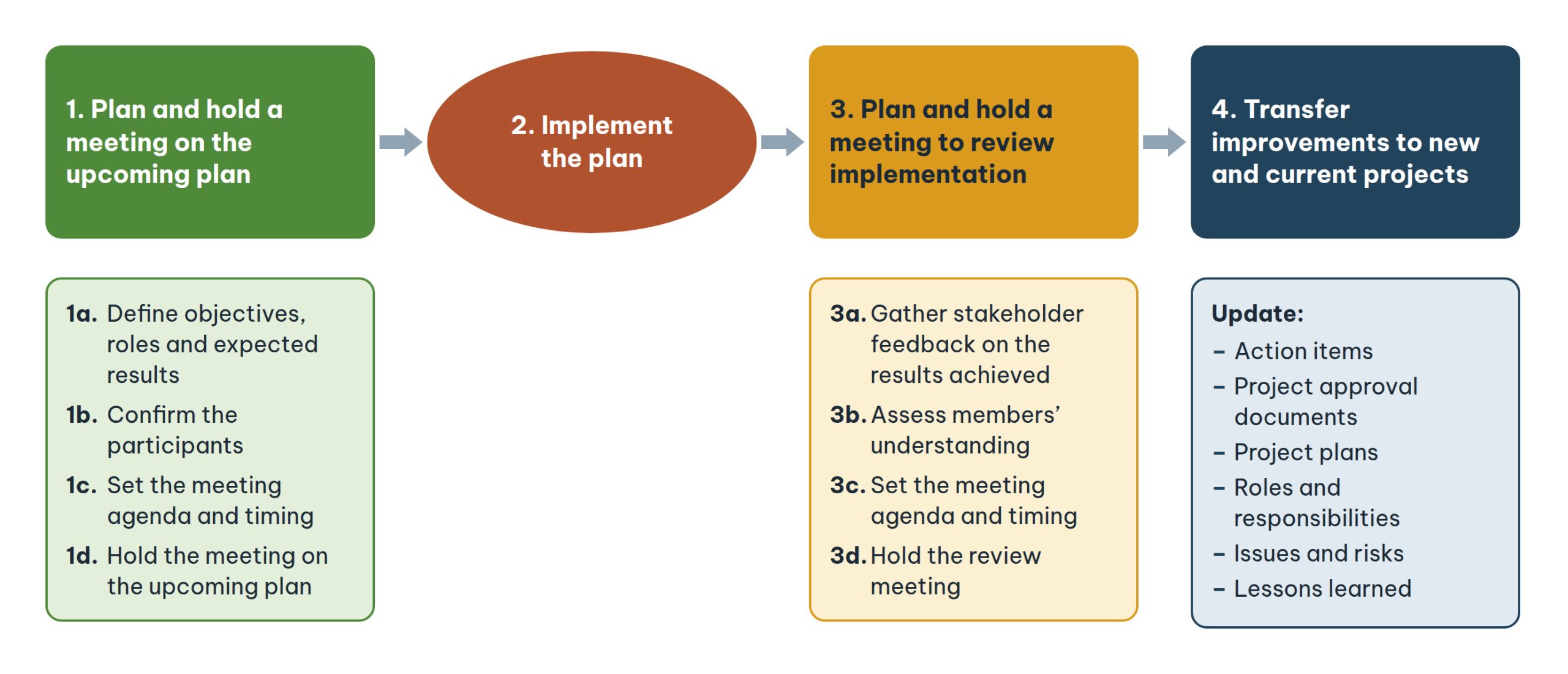
Figure 18.5. The level-1 learning and improvement process, repeated monthly or by stage.
Level 2 is far more effective than simply holding knowledge-sharing meetings or reporting lessons: improvements are actually applied to parallel and future projects. Level 3 helps leaders optimise the value of the portfolio: the right projects, at the right time, with the right resources.
Apply it to your project
| START LEVEL-1 LEARNING THIS MONTH
☐ Schedule a before-action review at the start of the month: objectives, outputs, roles, cost and schedule limits. ☐ Schedule an after-action review at month end using the four retrospective steps. ☐ Agree the rule: no personal blame, focus on improvement. ☐ Each review ends with at most three improvements, each with an owner. ☐ Effective improvements are proposed to programme level for roll-out. |
Reflection questions
| FOR INDIVIDUAL REFLECTION OR GROUP DISCUSSION
1. When are lessons learned captured in your organisation? Does anyone actually read and apply them? 2. Who could be your professional mentor? Whom could you mentor? 3. Does your organisation’s leadership regularly review the project portfolio to stop, adjust or add projects? |
Quick check
Question 1. Which is NOT a weakness of capturing lessons only after the project ends?
- Much has been forgotten
- People hesitate to raise their own shortcomings
- The lessons cannot help the project itself
- It takes too little time
Question 2. Which level of learning adjusts the organisation’s investment portfolio?
- Level 1
- Level 2
- Level 3
- None
Question 3. Professional mentoring is characterised by:
- One mentor for a whole department
- A one-to-one relationship based on trust, confidentiality and respect
- A boss–subordinate relationship
- Technical topics only
Answers and explanations
Question 1: D. The three weaknesses are forgetting, reluctance to speak, and no benefit to the project itself.
Question 2: C. Level 3 (strategy) is carried out by senior leaders, balancing strategic goals against the project portfolio.
Question 3: B. Mentoring is one mentor with one mentee.
Key points
| THE ESSENTIALS OF THIS LESSON
• Every project and phase is new; organisations need a culture of continuous learning to grow book knowledge, working knowledge and living knowledge. • Three linked forms: learning (courses, eLearning, coaching, mentoring), developing (associations, conferences, reading), contributing (sharing, presenting, writing). • Professional mentoring is a one-to-one relationship based on trust, confidentiality and respect, helping younger people grow professionally and personally. • Capturing lessons only at project close means much is forgotten, people hesitate to speak, and nothing helps the project itself. • Three levels: level 1 improves within the project; level 2 improves shared processes across projects; level 3 adjusts priorities and the investment portfolio. Each level has a before-action review and an after-action review. |
This lesson is adapted from Chapter 18 of Quản lý dự án: Hiểu đúng & Làm thật (“Project Management: True Understanding, Genuine Action”) by Truong Van Thien (Construction Publishing House, Hanoi, 2025). The content has been condensed and reorganised for learning; full data, quotations and references are in the book.