


PART 6 · RIGHT PROJECT, CLEAR PLAN
Lesson 13. Choosing the right project
Reading time ≈ 28 min · Based on Chapter 13 of the book
Sometimes you make the right decision,
and sometimes you make the decision right.
— Phil McGraw
| LEARNING OBJECTIVES
After this lesson you will be able to: • Ask the ethical and value questions before choosing a project. • Distinguish deliverables, outcomes and benefits. • Identify sources of investment opportunity and use timing, place and people. • Calculate and interpret NPV, PI, IRR, payback period and ARR, knowing each one’s limits. • Integrate benefits realisation management into the project life cycle. • Explain why budgets approved at the basic-design stage are often exceeded. |
A perfectly managed project that is the wrong project is still a failure. This lesson addresses the question that comes before every management technique: should we do this project at all?
The story of the Manhattan Project
| STORY
A technical success, an ethical burden Robert Oppenheimer led the Los Alamos Laboratory, present at every important step, bridging the cultures of scientists and the military. Within a few years the project built the first atomic weapon (the Trinity test, 16 July 1945). But after Hiroshima and Nagasaki, more than 200,000 people had died by the end of 1945. Oppenheimer told President Truman, “I feel I have blood on my hands,” and spent much of his remaining life campaigning for nuclear arms control. The physicist Paul Olum asked himself why they had allowed themselves to do something so terrible. |
The story raises questions to answer before choosing any project:
- What is the project’s purpose?
- Who gains value and benefit from it?
- Does it breach morality or ethics?
- Could it cause disaster for people and the ecosystem?
Deliverables, outcomes and benefits
Many projects finish on time, in scope and within budget, yet bring no real benefit. Or major changes make the original targets infeasible, but leaders hesitate to adjust them. The cause: we focus on the deliverable (a building, a plant, a feasibility report) and neglect:
| OUTCOME
The change The change in the organisation from using the deliverable. |
BENEFIT
The measurable improvement The measurable improvement from an outcome, received by one or more stakeholders. |
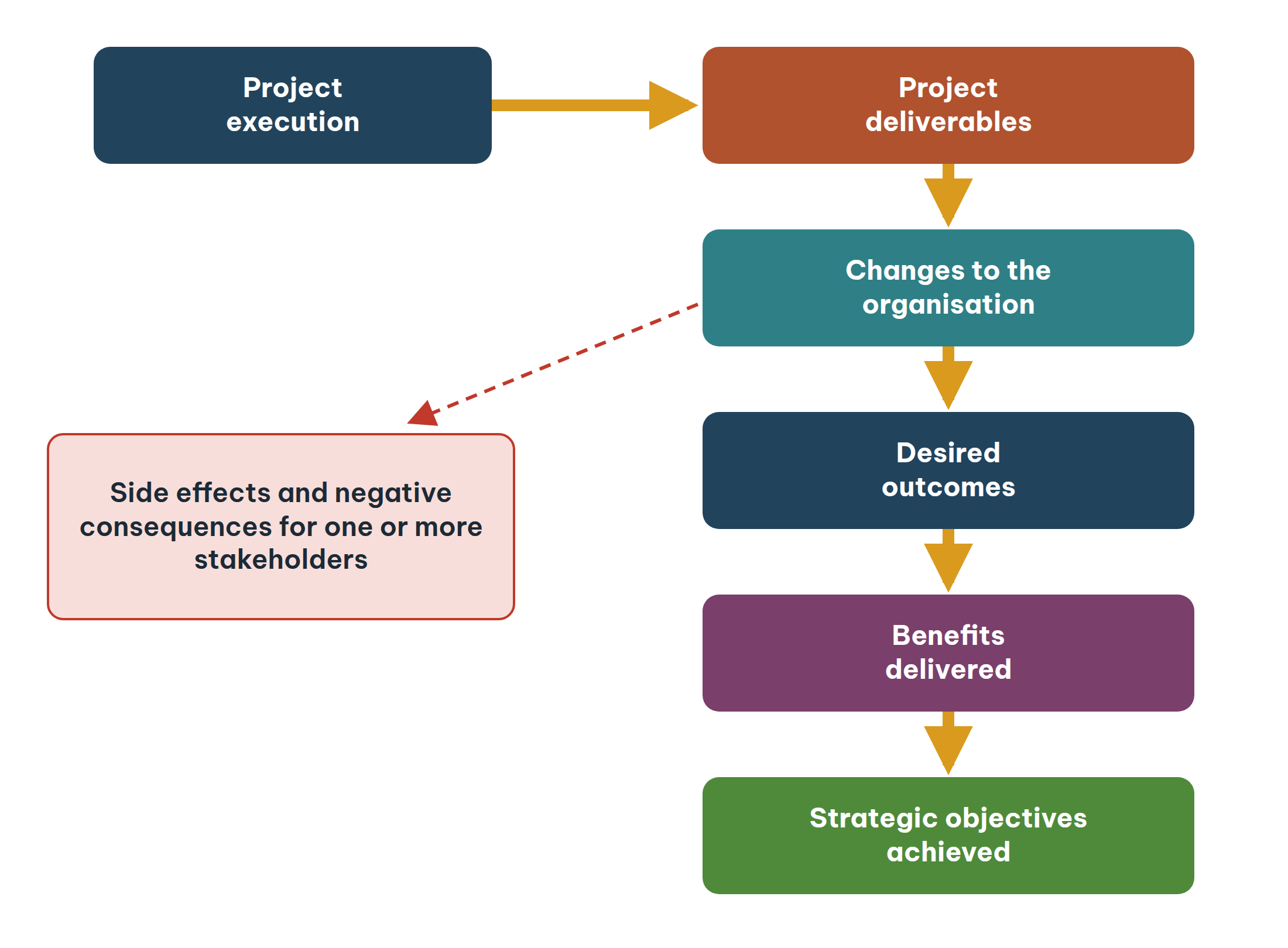
Figure 13.2. From deliverables to outcomes to benefits. Note the branch of “side effects” that may harm one or more stakeholders.
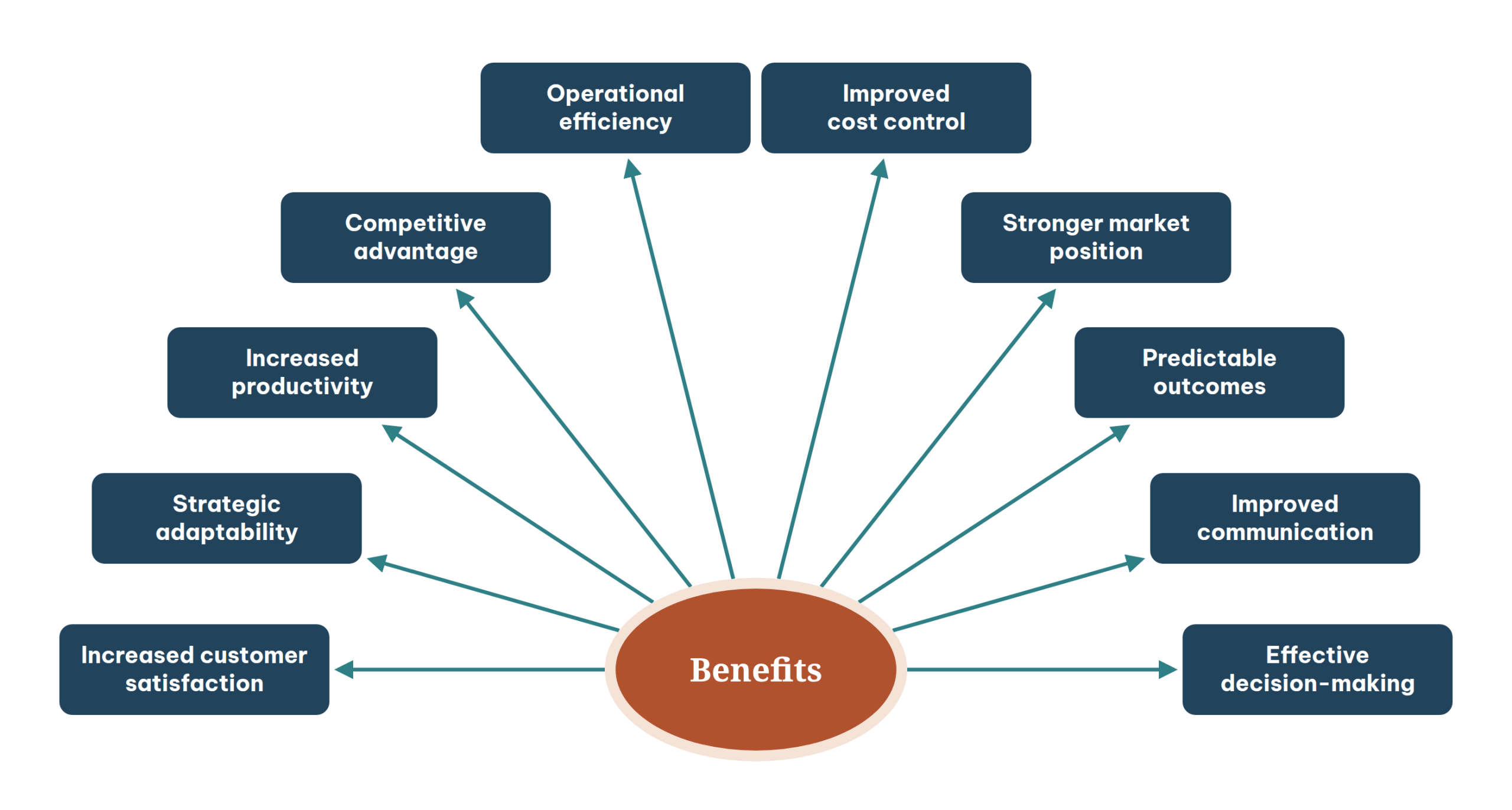
Figure 13.3. Benefits an organisation can realise.
Choosing investment opportunities
Mencius said: “The timing of heaven is not as good as the advantage of terrain; the advantage of terrain is not as good as the harmony of people.”
| TIMING
The right moment Material markets, credit conditions, incentive policies, construction seasons. Good timing can save considerable cost. |
TERRAIN
The right place Geology, logistics, access infrastructure, site layout. Thorough site investigation is an essential investment. |
HARMONY
The right people A cohesive team, good community relations, stakeholder consensus. Without harmony, every other advantage is meaningless. |
Strategy is the basis for seeking opportunities. Sources include:
- Sector development plans (power, oil and gas, minerals, transport…), regional plans and economic zones; including replacements for cancelled or delayed projects.
- Analysis of existing industries: profitability, capacity use, competitiveness, supply and demand.
- Inputs and outputs of industries: substituting imported materials and equipment; using by-products and waste.
- Import and export trends over time.
- Economic and social trends and customer needs.
- Development and application of new technologies.
- International trade and economic forums and conferences.
Five investment appraisal criteria
Net present value (NPV)
NPV = Σ Ct / (1 + r)t − I
Ct: cash flow at the end of year t; n: project life; r: discount rate (the opportunity cost of capital); I: initial investment.
- Accept only projects with NPV > 0.
- With a fixed budget: choose the set of projects with the highest total NPV.
- Mutually exclusive projects: choose the highest NPV.
Limits: an absolute value that ignores scale; tends to favour longer-lived projects.
Benefit–cost ratio (B/C or PI)
PI = PVB / I
Accept when PI > 1; among mutually exclusive projects choose the highest PI. Limits: can mis-rank projects of different scale (combine with NPV); sensitive to how costs are defined.
Internal rate of return (IRR)
IRR is the discount rate at which NPV equals zero, showing how attractive the project is. It agrees with NPV when cash flows are “conventional” (negative first, then positive) and projects are independent. It is unsuitable for choosing between mutually exclusive projects of different lives, scales or timing.
Payback period (PP)
The number of years for undiscounted net benefits to recover the investment. Easy to use, but biased toward quick payback and misleading for long-lived projects.
Accounting rate of return (ARR)
The ratio of average income (after tax, or before interest and tax) to investment (initial or average). Higher is better.
| Question | NPV | PI | IRR | PP | ARR |
| In theory | |||||
| Considers all cash flows? | Yes | Yes | Yes | No | – |
| Discounts at the opportunity cost of capital? | Yes | Yes | No | No | No |
| Satisfies value additivity? | Yes | No | No | – | – |
| Picks the value-maximising project among mutually exclusive ones? | Yes | No | No | – | – |
| In practice | |||||
| Simple? | Yes | Yes | Yes | Yes | Yes |
| Usable with limited information? | No | No | No | Maybe | Yes |
| Gives a relative measure? | No | Yes | Yes | No | Yes |
| WORKED EXAMPLE
NPV, PI, IRR and payback Example (any currency unit): I = 1,000; r = 10%; cash flows for years 1–8: 150, 200, 250, 250, 250, 250, 200, 150. NPV ≈ 129.2 (> 0); PI ≈ 1.13; IRR ≈ 13.4%; payback ≈ 4.6 years. Conclusion: the project creates value at a 10% discount rate; check competitive advantage and risk before deciding. An interactive calculator is available in the online lessons at pmsolutions.vn. |
| GOOD RATIOS ARE NOT ENOUGH
A project with attractive ratios that lies outside the organisation’s strengths will struggle. Ask: is the market segment linked to the business? Does the company understand the technology? Has it delivered similar projects? Does it have operating experience? Does it have the resources to manage and control the project? |
Benefits realisation management
This is a continuous journey across the life cycle: identify benefits → execute the benefits management plan → sustain the realised benefits. Ten commonly used measures:
| Return on investment, benefit–cost ratio | Productivity (output per unit of input) |
| Cost of quality (losses from not doing it right first time) | Cost performance index CPI |
| Schedule performance index SPI | Customer satisfaction (scale 1–100) |
| Project cycle time | Effectiveness in meeting requirements |
| Employee satisfaction | Alignment with strategic business objectives |
Control questions: are tangible, intangible, short- and long-term benefits tracked? Have deliverables been accepted by the beneficiaries? Are benefits measured against the plan and on time? Have new benefits and dis-benefits been identified and managed?
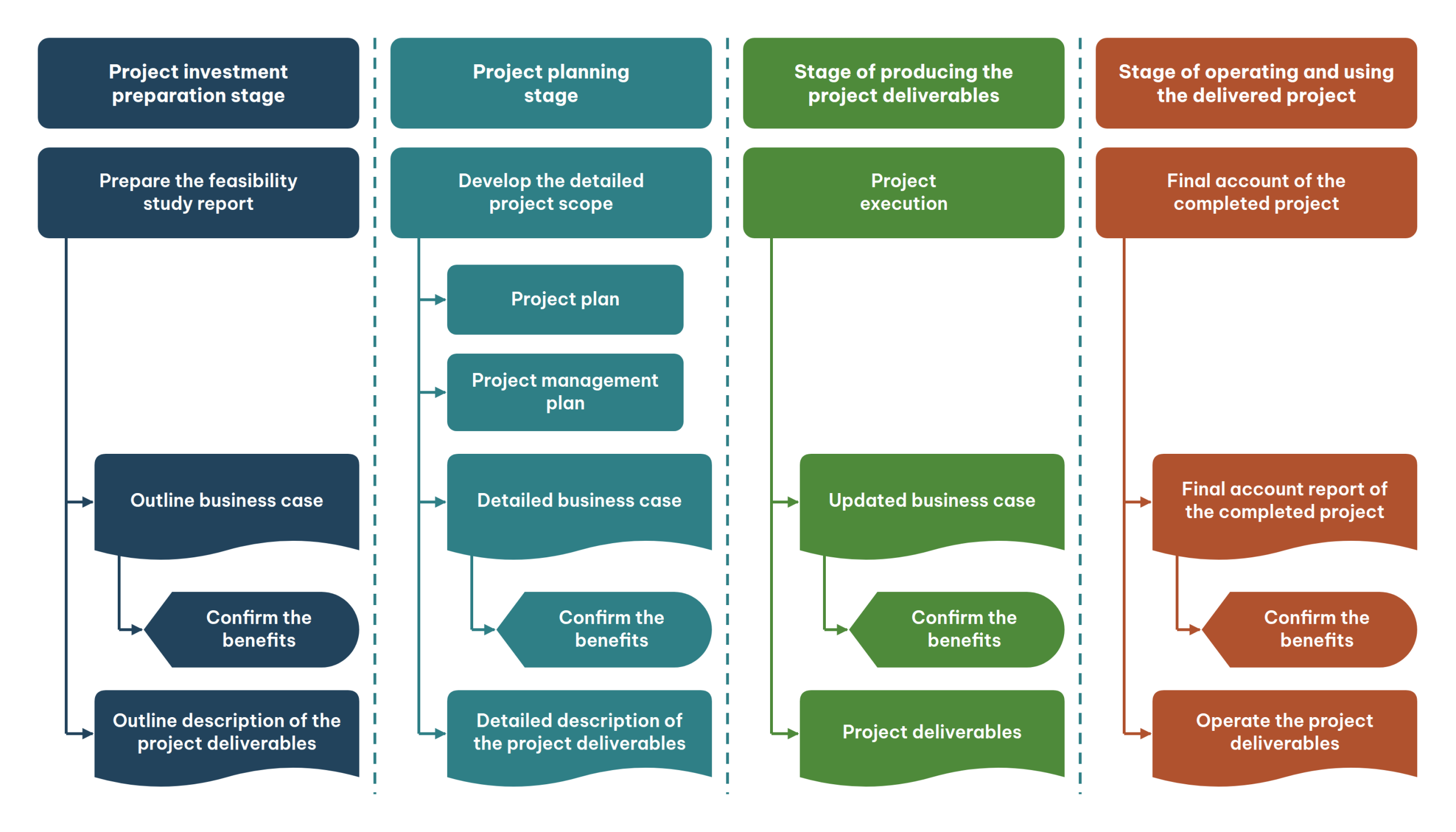
Figure 13.5. Roadmap for developing and updating the business case and realising benefits.
A business case usually covers: overview; reasons for the project; options (do, do minimum, do nothing); expected benefits (qualitative and quantitative); expected dis-benefits; the project schedule and benefit timing; costs; investment appraisal (NPV, IRR, B/C, payback); main risks and responses.
How reliable is the approved budget?
Many projects overrun because the approved figure itself was unreliable, for three reasons: the time lag between approval and execution; preliminary data; and no quantified risk analysis for contingency (Lesson 15).
The time lag
Under Vietnamese regulations, total investment is approved at the feasibility study (basic design) stage. The planned time from approval to selecting the EPC contractor is about 18 months; in practice it is often 3–5 years, and in some cases about 10. Material price swings and supply-chain bottlenecks mean package values drawn from the approved budget no longer match tender results.
Accuracy by design maturity (AACE)
| Estimate class | Class 5 | Class 4 | Class 3 | Class 2 | Class 1 |
| Design stage | Screening | Conceptual / basic design | FEED | Basic engineering / detailed | Detailed engineering |
| Design maturity | 0–2% | 1–15% | 10–40% | 30–75% | 65–100% |
| Low range | −20% to −50% | −15% to −30% | −10% to −20% | −5% to −15% | −3% to −10% |
| High range | +30% to +100% | +20% to +50% | +10% to +30% | +5% to +20% | +3% to +15% |
In Vietnamese practice, total investment is fixed at basic design, with only about 15% of design complete and a very wide accuracy range, so the probability of exceeding it is high. In international practice, the Final Investment Decision (FID) is taken after FEED is complete, so the budget is far more accurate.
Apply it to your project
| BEFORE PROPOSING A PROJECT FOR APPROVAL
☐ We have answered the four questions on purpose, beneficiaries, ethics and environmental impact. ☐ The business case includes three options: do, do minimum, do nothing. ☐ Benefits are quantified, with an owner and a realisation date. ☐ NPV, IRR and PI are calculated and tested for sensitivity to the discount rate. ☐ The estimate class and its accuracy range are stated. |
Reflection questions
| FOR INDIVIDUAL REFLECTION OR GROUP DISCUSSION
1. Was your last project judged a success on “on time, on budget” while delivering no real benefit? Why? 2. Does your organisation track benefits after handover? Who is responsible? 3. Given that total investment is approved at the basic-design stage, what can you do to reduce the risk of overrun? |
Quick check
Question 1. Which criterion satisfies value additivity and picks the value-maximising project among mutually exclusive ones?
- IRR
- PI
- NPV
- Payback period
Question 2. A “benefit” is best understood as:
- A deliverable such as a plant or report
- The measurable improvement from an outcome, received by stakeholders
- The contractor’s profit
- Cost saved during construction
Question 3. A total investment approved at basic design (AACE Class 4) has a high accuracy range of about:
- +3% to +15%
- +10% to +30%
- +20% to +50%
- +30% to +100%
Question 4. A project has NPV > 0, but the company has never done one and does not understand the technology. According to the lesson, you should:
- Decide at once because NPV is positive
- Analyse competitive advantage and plan to address weaknesses before deciding
- Reject it because of risk
- Look only at IRR
Answers and explanations
Question 1: C. According to Table 13.1, only NPV meets both theoretical tests.
Question 2: B. Deliverable → outcome → measurable benefit.
Question 3: C. Class 4: low range −15% to −30%, high range +20% to +50%.
Question 4: B. Good ratios are not enough; consider competitive advantage and the capability to manage and operate.
Key points
| THE ESSENTIALS OF THIS LESSON
• Before choosing a project, ask: what is its purpose, who benefits, does it breach ethics, could it cause disaster for people and the environment? • A project that meets schedule, cost and scope can still fail if it produces no outcome and no measurable benefit. • Discounted criteria: NPV, PI (B/C), IRR. Non-discounted: payback, ARR. Use them together; NPV satisfies the value-additivity principle. • Good ratios are not enough; consider the organisation’s competitive advantage in the project. • Benefits realisation is a continuous journey: identify, execute the benefits plan, sustain the realised benefits. • A budget approved at basic design (≈ 15% of design complete) has an accuracy range of −15% to −30% / +20% to +50%; international practice takes FID after FEED. |
This lesson is adapted from Chapter 13 of Quản lý dự án: Hiểu đúng & Làm thật (“Project Management: True Understanding, Genuine Action”) by Truong Van Thien (Construction Publishing House, Hanoi, 2025). The content has been condensed and reorganised for learning; full data, quotations and references are in the book.