


PART 4 · BUILDING COMPETENCE
Lesson 7. Project management fundamentals
Reading time ≈ 22 min · Based on Chapter 7 of the book
All things have roots and branches; all affairs have a beginning and an end.
To know what comes first and what comes after is to come near the Way.
— The Great Learning (Four Books)
| LEARNING OBJECTIVES
After this lesson you will be able to: • Recognise the areas of modern project management in how the Nguyễn dynasty built the Huế Citadel. • Know the milestones of modern project management in the 20th and 21st centuries. • Define project and project management according to ISO 21500/21502 and PMI. • Describe the chain from strategy to benefits, and the 5 process groups and 10 subject groups of ISO 21500. • Describe the steps to set up project management, starting from the business case. |
Project management was not invented in the 20th century. The Pyramids of Giza, the Great Wall or the Huế Citadel all show how well the ancients organised great works. This lesson connects that past with modern standards.
Lessons from the Huế Citadel
Vietnam has many heritage works: the Cổ Loa Citadel (3rd century BC, three rings of ramparts, about 2.2 million m³ of earthworks), the Imperial Citadel of Thăng Long (founded 1010) and the Huế Citadel. The building of the Huế Citadel is recorded in detail in the Nguyễn dynasty’s woodblock archives and imperial records.
| SUMMARY
27 years to build the Citadel (1805–1832) In 1803 Emperor Gia Long surveyed the site with his officials and approved the design. Villagers from eight communes whose land was taken were compensated at the deed price; each household received money to move, and the people of Phú Xuân were given public land and a loan of 1,000 strings of cash to relocate. Work began in April 1805 with about 30,000 soldiers and labourers, peaking at 80,000. The walls were first built of earth; brick facing began in 1818. The emperor set working hours, changed them in the heat of summer, stationed imperial physicians on site and had the walls inspected twice a month. Floods repeatedly washed away hundreds of metres of wall and repairs followed. In 1832 Emperor Minh Mạng completed the work, with some 147 structures, and rewarded everyone according to their contribution. |
Seen through modern project management, almost every area is present:
| Modern area | How the Nguyễn court did it |
| Objectives and vision | “A ruler who founds a nation and a capital must make its citadel strong”; a legacy for ten thousand generations. |
| Leadership and sponsorship | The reigning emperor as supreme sponsor, changing across reigns. |
| Scope and technical requirements | Architecture suited to local culture and terrain; full functions for living, governing and ceremony. |
| Land acquisition | Fair compensation and a sensible resettlement policy. |
| Schedule | Managed in phases, building mostly in the dry season. |
| Workforce | Over 30,000 people, generous pay, working hours adjusted to the weather. |
| Quality | Regular inspection; “choose good materials, build to last… one hard effort for lasting ease”. |
| Health and environment | Medical care on site; inspections every three months to keep the works clean and in order. |
| Change management | Extending the works and adding functions over successive phases. |
| Rewards | Rewards by contribution, with a three-day banquet at completion. |
| Cost and value | Very costly, but durable for centuries and now a World Heritage site. |
Milestones of modern project management
| Year | Event |
| 1911 | Frederick Taylor publishes The Principles of Scientific Management. |
| 1917 | Henry Gantt develops the Gantt chart. |
| 1957 | DuPont introduces the Critical Path Method. |
| 1958–1962 | The US Department of Defense applies PERT and the Work Breakdown Structure (WBS). |
| 1986 | The term SCRUM is used to name a flexible management approach. |
| 1989 | Earned Value Management (EVM) is applied; the UK’s CCTA develops PRINCE2. |
| 1997 | Eliyahu M. Goldratt introduces Critical Chain Project Management (CCPM). |
| 2001 | The Agile Manifesto, with 4 values and 12 principles. |
| 2012–2017 | ISO 21500 (project management), ISO 21504 (portfolio), ISO 21503 (programme). |
Projects and project management
Right understanding rests on “investigating things to extend knowledge”: studying a thing until its principle is fully grasped.
— The Great Learning (Four Books)
| PROJECT
ISO 21500 A temporary endeavour to achieve one or more defined objectives. PMI A temporary endeavour undertaken to create a unique product, service or result. |
PROJECT MANAGEMENT
ISO 21502 Coordinated activities to direct and control the accomplishment of agreed objectives. PMI The application of knowledge, skills, tools and techniques to project activities to meet project requirements. |
A project therefore has a start, an end, objectives to achieve and distinctive outputs.
From strategy to benefits
In ISO 21500, projects are the means to realise an organisation’s strategy:
- Strategy: Identifies opportunities.
- Opportunities: Evaluated and documented.
- Business case: Develops the selected opportunities.
- Projects: One or more projects are approved.
- Deliverables: The results of project execution.
- Benefits: Realised, feeding back into strategy.
Projects run on three groups of processes: project management processes (specific to PM), product processes (design, manufacture and so on, varying with the product) and support processes (finance, accounting, logistics).
5 process groups and 10 subject groups
5 process groups (ISO 21500)
- Initiating: Start a project or phase, set objectives, authorise the project manager.
- Planning: Detailed plans and baselines for measuring and control.
- Implementing: Perform PM activities and support delivery according to plan.
- Controlling: Monitor and measure against plan; corrective and preventive action.
- Closing: Confirm completion; capture lessons learned.
A project or phase starts with initiating and ends with closing; the controlling group interacts with all the others.
10 subject groups
| Integration
Combine, coordinate, control and close activities. |
Stakeholder
Identify and manage those who affect or are affected. |
Scope
Define the work and deliverables. |
| Resource
People, equipment, materials, facilities, tools. |
Time
Schedule, monitor and control. |
Cost
Budget, monitor and control costs. |
| Risk
Identify and manage threats and opportunities. |
Quality
Plan, assure and control quality. |
Procurement
Purchasing and supplier relationships. |
| Communication
Plan, manage and distribute information. |
Each process group intersects each subject group in specific processes, described in detail in ISO 21500. How they are applied depends on the project and the chosen methodology.
Setting up project management
Broadly, project management is planning, assigning, monitoring and controlling every aspect of a project to meet its objectives for schedule, cost, quality, scope and benefits. It starts with the business case, which sets the purpose, objectives, scope, deadline and budget limit.
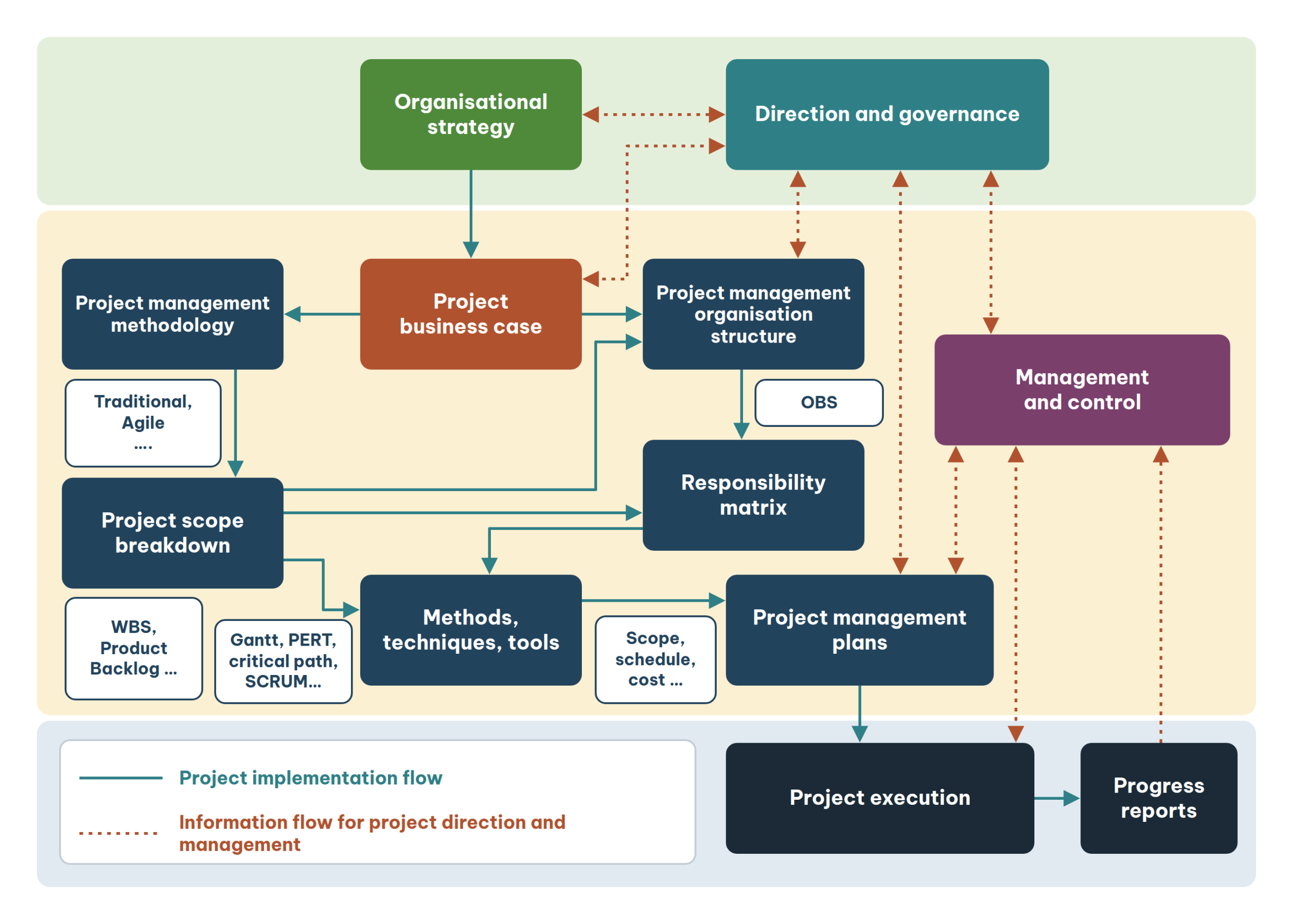
Figure 7.12. Overview of the basic steps and methods for setting up project management.
- The business case shapes the organisation breakdown structure (OBS) and the choice of methodology (Lessons 8 and 10).
- The methodology determines which PM processes apply.
- Break the project into smaller parts: a WBS (traditional) or themes, epics and stories (agile).
- Use Gantt, PERT, critical path or Scrum to build the scope, schedule and cost plans.
Apply it to your project
| DOES YOUR PROJECT HAVE A PROPER “BIRTH CERTIFICATE”?
☐ A business case states purpose, objectives, scope, deadline and budget limit. ☐ We know which strategic objective the project serves and how benefits will be measured. ☐ There is a clear organisation structure (OBS) and a chosen methodology. ☐ A WBS or backlog breaks the work down to assignable level. ☐ There is a baseline to measure against when controlling. |
Reflection questions
| FOR INDIVIDUAL REFLECTION OR GROUP DISCUSSION
1. Which strategic objective of your organisation does your current project serve? How will its final benefits be measured? 2. Of the 10 subject groups, which does your organisation handle well and which is often neglected? 3. If you applied “investigating things to extend knowledge” to a current project problem, what more would you need to learn? |
Quick check
Question 1. In ISO 21500, which process group interacts with all the others?
- Initiating
- Planning
- Controlling
- Closing
Question 2. Project management starts from which document?
- The EPC contract
- The business case
- The monthly report
- The acceptance certificate
Question 3. Emperor Gia Long giving public land and a 1,000-string loan to relocate Phú Xuân villagers corresponds to which area?
- Quality management
- Land acquisition and resettlement
- Risk management
- Communication management
Question 4. In agile project management, a project is typically broken down into:
- A WBS and work packages
- Themes, epics and stories
- Contracts and bid packages
- FEED stages
Answers and explanations
Question 1: C. The controlling group monitors, measures and adjusts, so it interacts with every other group.
Question 2: B. The business case sets purpose, objectives, scope, deadline and budget, the basis for the OBS and methodology.
Question 3: B. This is a compensation and resettlement policy.
Question 4: B. Agile breaks work into Theme → Epic → Story → Task instead of a traditional WBS.
Key points
| THE ESSENTIALS OF THIS LESSON
• The ancients managed works systematically: the Huế Citadel (1805–1832) shows objectives, leadership, scope, land clearance, phased scheduling, workforce, quality, health and environment, change and rewards. • A project is a temporary endeavour to achieve one or more defined objectives (ISO 21500), creating a unique product, service or result (PMI). • The value chain: strategy → opportunities → business case → project → deliverables → benefits → strategy. • 5 process groups: initiating, planning, implementing, controlling, closing. 10 subject groups: integration, stakeholder, scope, resource, time, cost, risk, quality, procurement, communication. • Setting up PM: business case → organisation structure (OBS) and methodology → breakdown of work (WBS or Theme/Epic/Story) → planning tools (Gantt, PERT, critical path, Scrum). |
This lesson is adapted from Chapter 7 of Quản lý dự án: Hiểu đúng & Làm thật (“Project Management: True Understanding, Genuine Action”) by Truong Van Thien (Construction Publishing House, Hanoi, 2025). The content has been condensed and reorganised for learning; full data, quotations and references are in the book.