


PART 6 · RIGHT PROJECT, CLEAR PLAN
Lesson 14. Proactive planning
Reading time ≈ 16 min · Based on Chapter 14 of the book
People do not plan to fail;
they simply fail to plan to succeed.
— William Arthur Ward
| LEARNING OBJECTIVES
After this lesson you will be able to: • State the purpose of a project plan. • Analyse the limits of contractor-selection plans and annual plans in Vietnamese practice. • Recognise two “diseases” of planning: subjectivity and blind optimism. • Plan on the basis of evidence and experience, stage by stage, with tolerances and an escalation mechanism. |
In 1947 President Hồ Chí Minh advised young people: do not draw up vast programmes that sound fine but cannot be carried out… one small programme properly carried out is better than a hundred grand programmes that cannot be done. The advice fits project people perfectly.
What is a project plan for?
| Organise the work
Allocate resources and responsibilities. |
The big picture
Give everyone a reason to look ahead. |
| Awareness training
Show why the work matters and how limited the time is. |
Monitor and control
And communicate with stakeholders. |
Planning sets objectives, scope, key milestones and deliverables, assigns tasks and allocates resources, based on the chosen methodology and the project’s own information.
Planning practice in Vietnam
The investment preparation phase has plans for tasks such as selecting consultants for pre-feasibility and feasibility studies. The implementation phase mainly has two kinds of plan:
| CONTRACTOR-SELECTION PLAN
Made right after project approval Divides the project into bid packages with values, selection methods, contract types and durations. Many packages lack information and are marked “provisional” or “to be decided”. It focuses on packaging, not on objectives. |
ANNUAL PLAN
By calendar year Like a business’s annual production plan, not tied to key milestones or phases; figures are subjective; once the project slips or overruns, it becomes a formality. |
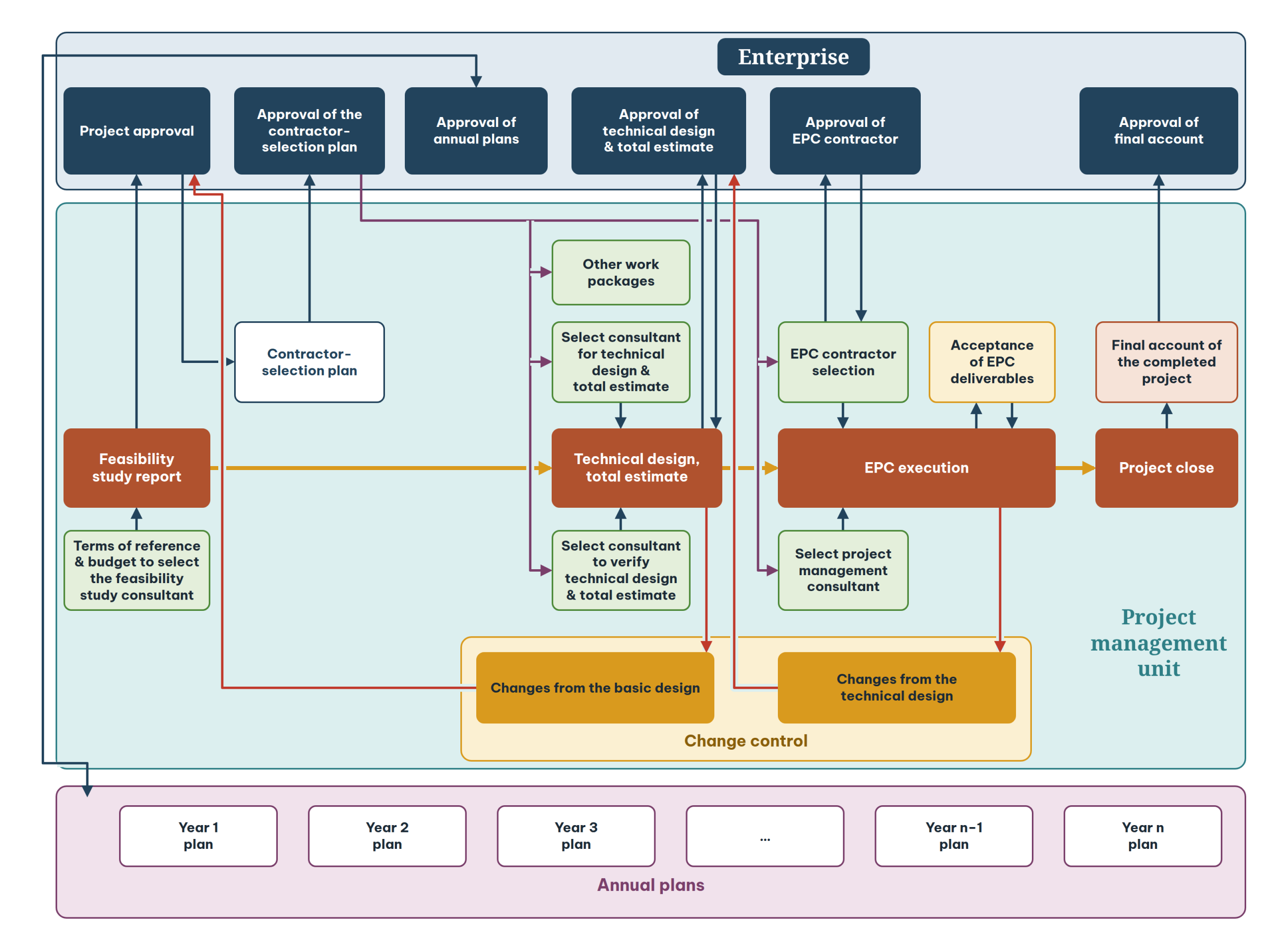
Figure 14.1. Project planning practice in Vietnam: many approval steps, with annual plans detached from the project’s objectives.
| CONSEQUENCE
Without an integrated plan and linked detailed plans tied to project objectives, “control” and “management” on many projects lose their real meaning. |
Drawing up a feasible plan
A bad plan is one that applies neither experimentation nor experience. A good plan is one that applies one or the other diligently. The best plan is one that maximises both experimentation and experience.
— How Big Things Get Done
Two diseases of planning
| Subjectivity
Imposing personal will without grounding in reality: work is missed, available resources ignored, stakeholders not analysed. |
Blind optimism
Excessive faith in things without solid basis; risks neither assessed nor managed. |
Evidence-based planning
Decisions rest on data, evidence and real test results. Divide the life cycle into short stages, each going through plan – execute – monitor and control – complete, then learn and adjust for the next stage. This is also how Agile plans.
Experience-based planning
The plan is built with people and parties who have delivered similar projects. Their experience helps judge the impact of risks and makes cost and schedule credible. When parties have worked together many times, costs fall along the learning curve. Just as important: plan to select contractors who truly have the required capability and experience.
Stage planning (PRINCE2)
PRINCE2 was issued by the UK government in 1996 after many projects ran late and over budget. Its stage planning combines evidence and experience and suits industrial, energy and infrastructure projects well.
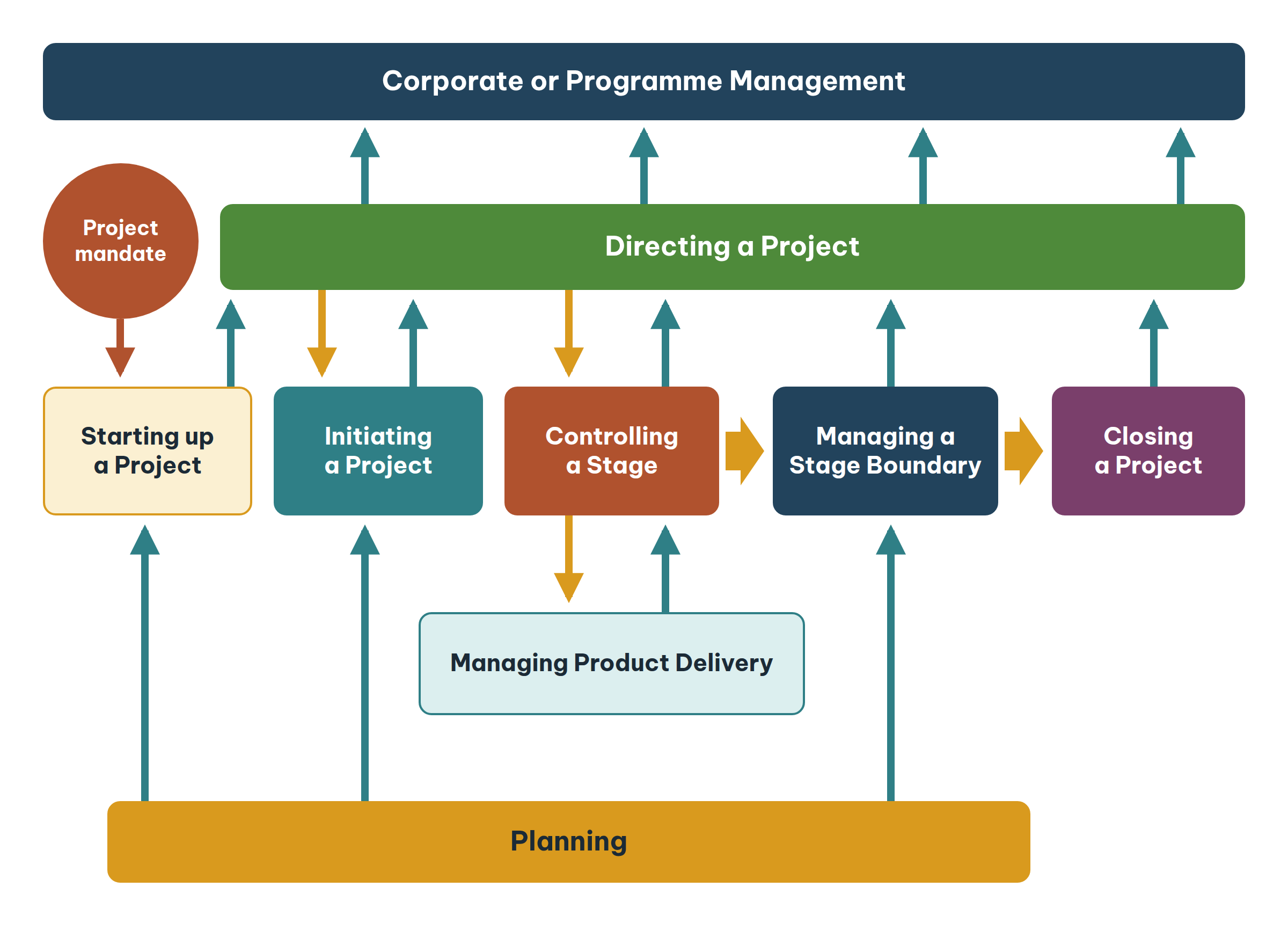
Figure 14.3. The PRINCE2 process model.
- Each stage has a plan with tolerances for time, quality, scope, cost, risk and benefits.
- The project organisation controls the stage within those tolerances.
- If tolerances are exceeded, it escalates to governance with a draft exception plan; once reviewed and approved, the plan is carried out to bring the project back on track.
- Work-package plans for teams are internal and need no governance approval.
- The next stage plan is prepared at the end of the current stage and submitted for approval.
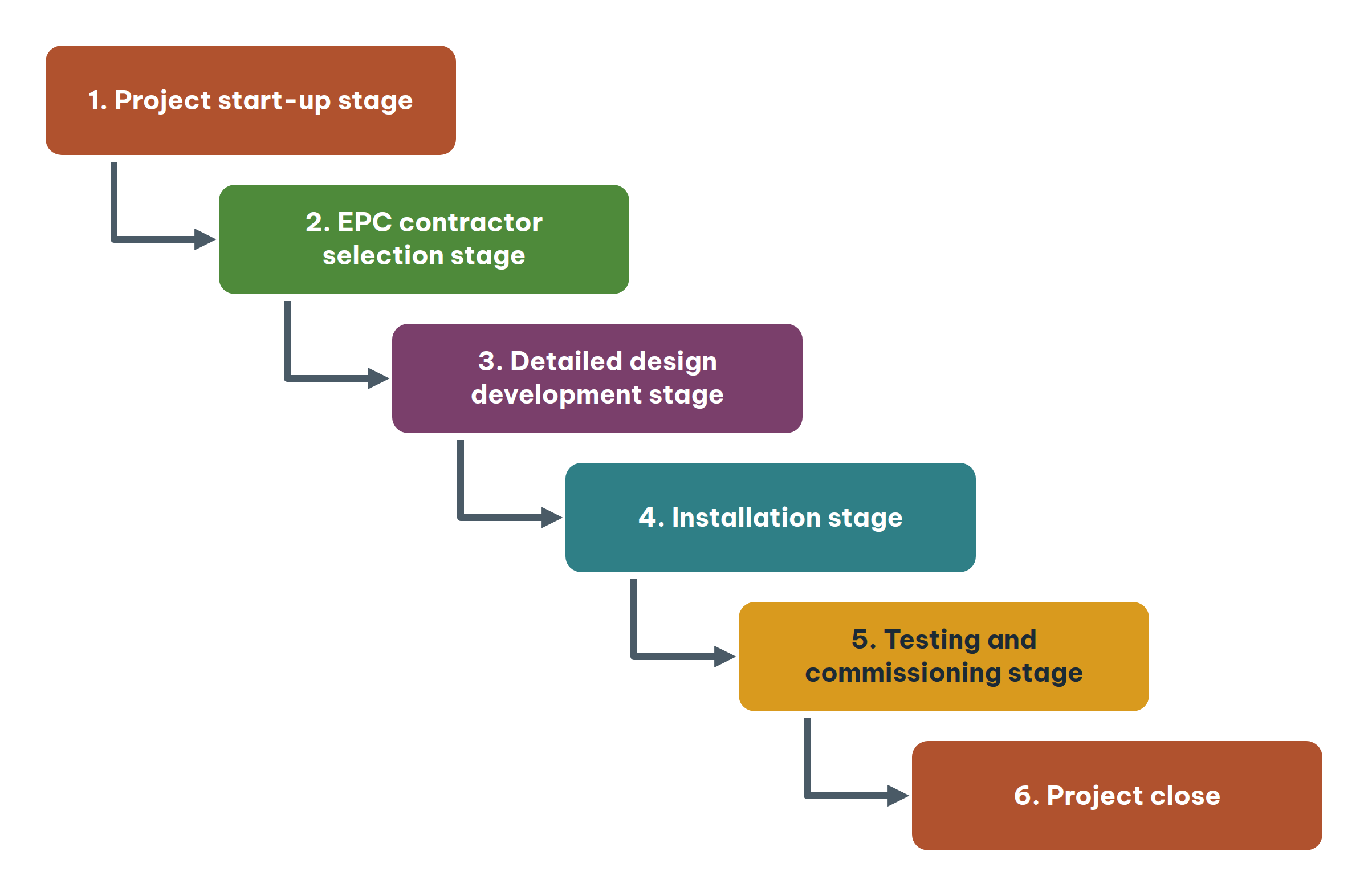
Figure 14.4. Typical stages of an industrial project: project start-up; EPC contractor selection; detailed design; installation; testing and commissioning; project close. Contractor selection for each stage is planned in detail within that stage’s plan.
Stay alert during execution
However carefully a plan is made, there will be “deviations”. During execution, stay careful and close to reality, seize opportunities and solve problems promptly.
| A DAILY REMINDER
“Our project is only one month from failure.” Every month the parties review scope, schedule and quality. If they are not transparent and frank, and do not name the real problems to solve together, the project drifts off course, month by month, towards certain failure. |
Apply it to your project
| CHECK YOUR PROJECT PLAN
☐ There is an integrated plan tied to objectives and key milestones, not only annual plans. ☐ The project is divided into stages, each with clear tolerances. ☐ There is an escalation procedure with an exception plan when tolerances are exceeded. ☐ People with experience of similar projects have reviewed the plan. ☐ Optimistic assumptions have been tested against real data. |
Reflection questions
| FOR INDIVIDUAL REFLECTION OR GROUP DISCUSSION
1. Does your project have an integrated overall plan tied to its objectives, or only a contractor-selection plan and annual plans? 2. The last time you planned, who with experience of similar projects was invited to comment? 3. If you put the words “Our project is only one month from failure” on your desk, how would your next monthly meeting change? |
Quick check
Question 1. The main limitation of the annual plan in Vietnamese practice is that it:
- Is too detailed
- Is not tied to key milestones or project phases
- Is prepared by the contractor
- Is prepared too early
Question 2. “Blind optimism” in planning means:
- Trusting the team
- Excessive faith in unfounded things, with risk not assessed
- Setting ambitious goals
- Planning quickly
Question 3. Under PRINCE2 stage planning, when an issue exceeds tolerance the project organisation should:
- Handle it alone and report later
- Escalate to governance with a draft exception plan
- Stop the project
- Wait for next year’s plan
Answers and explanations
Question 1: B. Annual plans follow the calendar year, detached from project objectives, and easily become a formality.
Question 2: B. Blind optimism leaves risks unassessed and unmanaged, making the plan infeasible.
Question 3: B. Exceeding authority means escalating with an exception plan for review and approval.
Key points
| THE ESSENTIALS OF THIS LESSON
• A plan organises work and allocates resources and responsibilities; it is a big picture, an “awareness-training document”, and a tool for control and communication. • Vietnamese practice relies on contractor-selection plans and annual plans, without an integrated plan tied to objectives, so control becomes a formality. • Two diseases of planning: subjectivity (imposed will, missed work, ignored resources) and blind optimism (unfounded confidence, ignored risk). • The best plans maximise both evidence (short stages, learn and adjust) and experience (involve people who have done it before). • Stage planning (PRINCE2): each stage has tolerances for time, quality, scope, cost, risk and benefits; if they are exceeded, escalate to governance with an exception plan. |
This lesson is adapted from Chapter 14 of Quản lý dự án: Hiểu đúng & Làm thật (“Project Management: True Understanding, Genuine Action”) by Truong Van Thien (Construction Publishing House, Hanoi, 2025). The content has been condensed and reorganised for learning; full data, quotations and references are in the book.