


PART 5 · BUILDING THE ORGANISATION
Lesson 11. Leading the project organisation
Reading time ≈ 18 min · Based on Chapter 11 of the book
Talented and virtuous people are the vital energy of the nation; when that energy flourishes, the nation is strong and prosperous;
when it wanes, the nation is weak and lowly.
— Thân Nhân Trung (15th century)
| LEARNING OBJECTIVES
After this lesson you will be able to: • Draw leadership lessons from the story of Xenophon. • Apply criteria and a process for choosing a project director by project type and knowledge level. • Distinguish wise trust from naive trust. • Practise the eight essentials: Benevolence, Righteousness, Trustworthiness, Wisdom, Clarity, Talent, Firmness, Discipline. |
Socrates held that the greatest leader is one who steps forward when needed, not for ego or gain but out of responsibility to society, and who returns to ordinary life when the task is done. This lesson is about how to choose, and how to be, a project leader.
Lessons from Xenophon
| STORY
The 2,400-kilometre retreat Xenophon, a student of Socrates with little command experience, stepped forward to lead an army of Greek mercenaries trapped deep in hostile Persian territory. He kept up their morale across more than 2,400 km of desert and mountains, fought an enemy many times larger, dealt with factions inside his own army, and later faced political turmoil at home. (From Power, Ambition, Glory by Steve Forbes and John Prevas.) |
Lessons for project leaders:
- Lead by example through character and style.
- Pass on strength and confidence; kindle the team’s enthusiasm.
- Persevere with courage through trials to the final goal; this is also “Level 5 leadership”.
- Handle both external upheaval and internal factions and division.
- When old goals no longer fit, patiently build consensus on new ones.
Panning for gold
A strong, proficient, ethical project team keeps the project flowing; a weak, unethical one blocks it. At the centre stands the project director. A wrong choice is a later “disaster”. Confucius said that raising the upright above the crooked can make the crooked upright.
Project leaders need PM and technical knowledge and skills, a desire to serve, and to be exemplars of ethics, integrity and responsibility. Selection must be open-minded and impartial, favouring neither friends nor “good families”.
Eight ways of assessing people in Binh thư yếu lược
| 1. Question them and see if their answers are clear | 5. Test them with wealth to see if they are incorruptible |
| 2. Press them with argument to see if they can adapt | 6. Test them with beauty to see if they stay proper |
| 3. Test them with spies to see if they are loyal | 7. Test them with hardship to see if they are brave |
| 4. Question them in detail to see their virtue | 8. Let them drink to see if they keep their composure |
The same text distinguishes the “capacity” of generals, from one fit to lead ten men (who hides wrongdoing and ignores the troops’ grievances) to one fit to lead a hundred thousand (who keeps worthy people close, promotes talent, is careful, sincere and generous). A good general is one who “does not stir when provoked”: not moved by gain, not moved by contempt for the enemy.
Choosing by project type and knowledge level
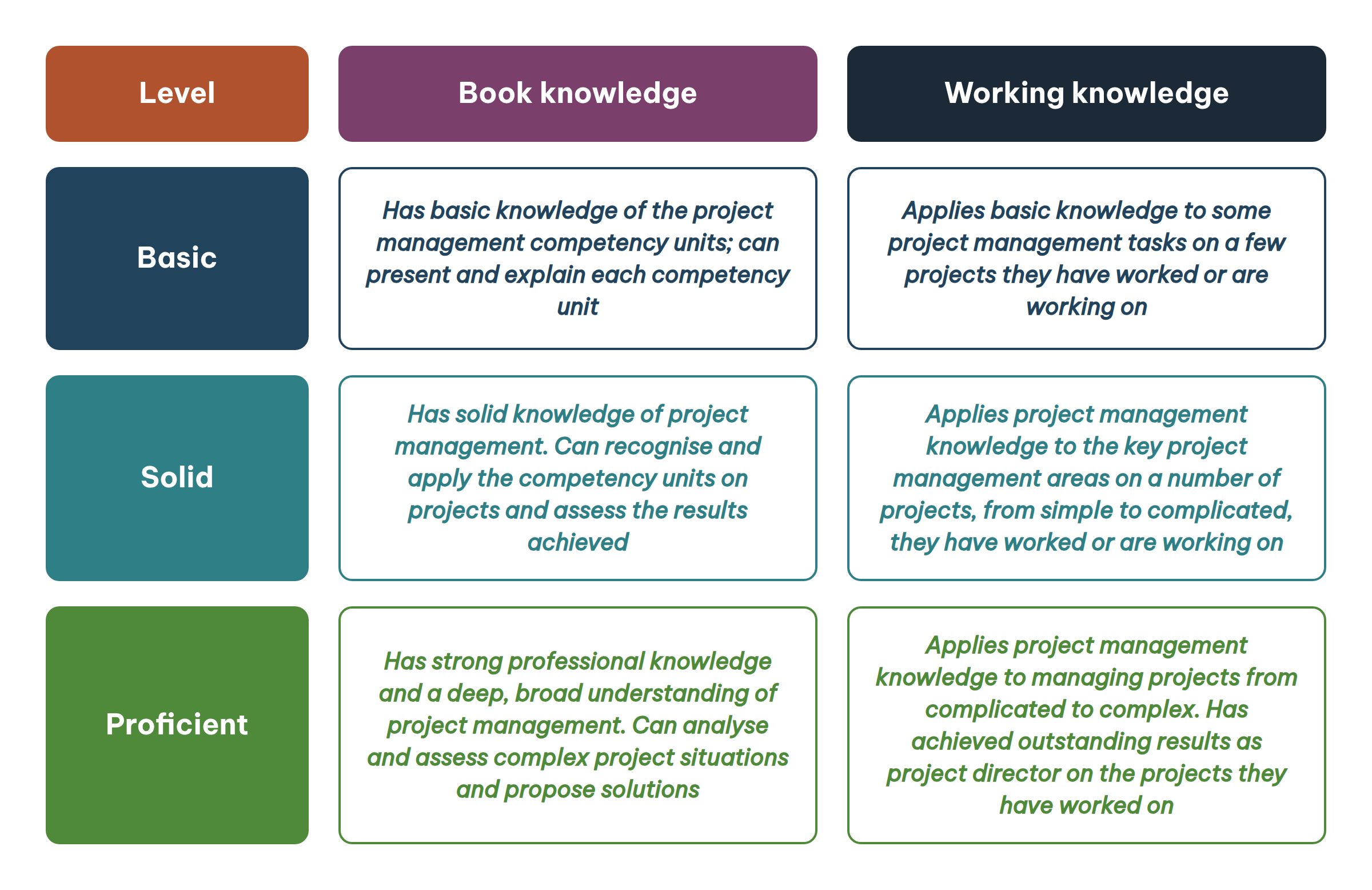
Figure 11.1. Three levels for assessing book knowledge and working knowledge.
| Project type | Level required of the project director |
| Simple, small team | Basic |
| Simple but large team and long duration; or complicated | Solid |
| Complex | Proficient |
A suggested selection process:
- Candidates self-assess their book and working knowledge across the three competence groups (Figure 11.2).
- Leaders interview, hear a presentation on a set topic, observe attitude, and press with questions to see how the candidate adapts.
- Assess book knowledge, working knowledge and living knowledge.
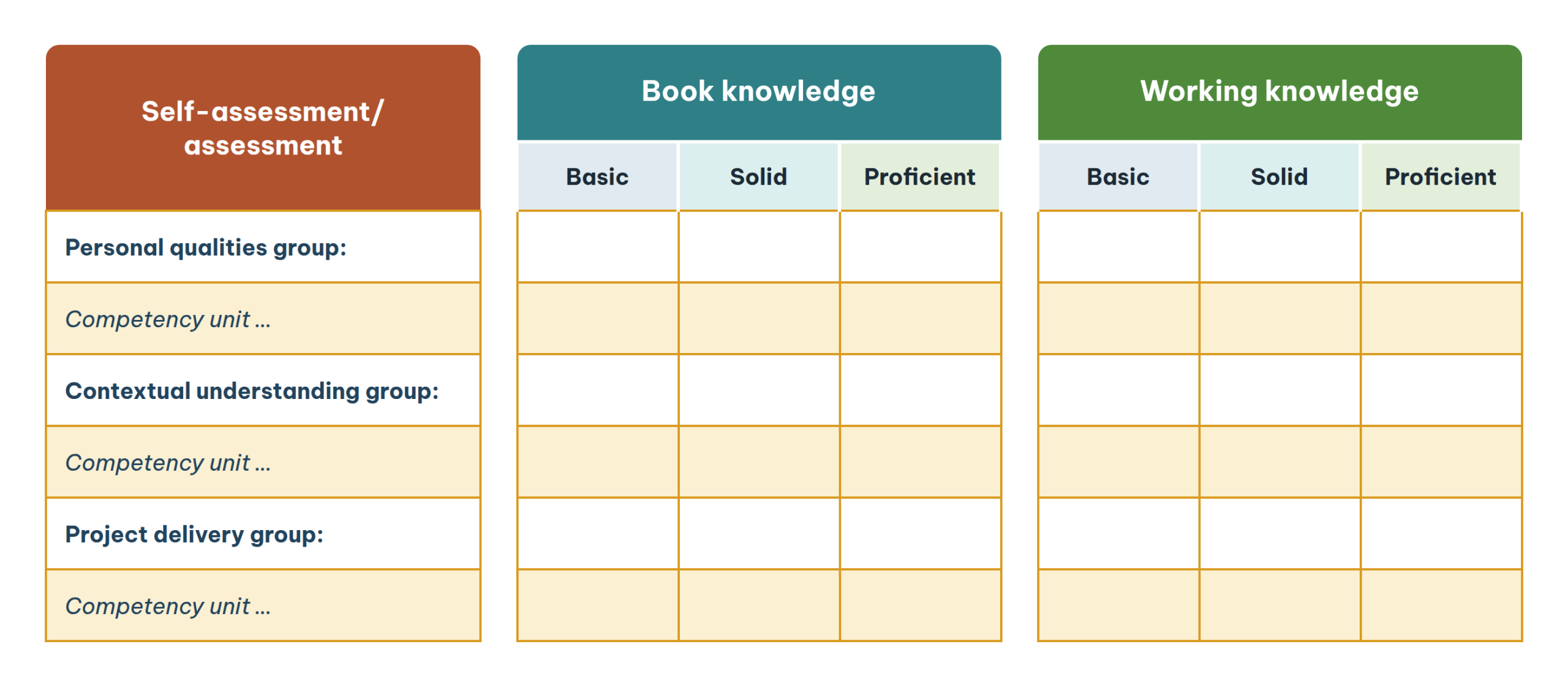
Figure 11.2. Self-assessment or candidate assessment table across the three competence groups.
Placing wise trust
Once the right person is chosen, trust them and give them full authority. Binh thư yếu lược says that when a ruler entrusts a worthy general without suspicion, the general responds with uprightness, the army is disciplined and loyalty holds firm.
But trust must be well placed: based on experience in reading people and on analysis of context, competence and character. Avoid the naivety of the legendary princess Mỵ Châu, whose misplaced trust handed the magic crossbow to the enemy, a lesson the poet Tố Hữu recalls in his poem Tâm sự.
Trusted and fully empowered, the project leader decides the delivery strategy, organisation structure and positions, and recruits suitable people.
“The way of the general”
Binh thư yếu lược lists eight essentials of generalship, with sincerity at their core. Applied to the head of a project organisation:
| NHÂN · BENEVOLENCE
Care for people Value those who work with you, care about their lives and help them grow. |
NGHĨA · RIGHTEOUSNESS
Serve a shared ideal Create a collaborative, empathetic environment aimed at the project’s goals and benefits. |
TÍN · TRUSTWORTHINESS
Keep your word Be honest and sincere; keep promises; match words with deeds. |
| TRÍ · WISDOM
Tell right from wrong Weigh what should and should not be done. |
MINH · CLARITY
A clear mind Unclouded by bias; humble, respectful to all. |
TÀI NĂNG · TALENT
Keep improving Cultivate ethics, knowledge and skills; bring outstanding capability to the role. |
| CƯƠNG · FIRMNESS
Self-mastery Control emotions, stand firm against temptation, resolve to do what is right. |
NGHIÊM · DISCIPLINE
Maintain standards Keep delivery discipline and professional ethics; criticise frankly; conduct yourself courteously and properly. |
Apply it to your project
| WHEN SELECTING OR ASSESSING A PROJECT DIRECTOR
☐ The project type (simple, complicated, complex) and the matching competence level are defined. ☐ Candidates self-assessed across the three competence groups before interview. ☐ The interview includes scenario questions on ethics and handling difficulty. ☐ Selection criteria are open and not based on personal connections. ☐ After selection, the delegation of authority is issued in writing. |
Reflection questions
| FOR INDIVIDUAL REFLECTION OR GROUP DISCUSSION
1. On what criteria was your most recent project director chosen? Using Figure 11.1, which level were they at? 2. Of the eight essentials, which do you show best, and which needs training? 3. Does your organisation fully empower the project director after appointment, or still micro-manage? |
Quick check
Question 1. For a complex project, what level of book and working knowledge should the project director have?
- Basic
- Solid
- Proficient
- It does not matter
Question 2. What does the story of Mỵ Châu illustrate?
- The importance of weapons
- Trust must be well placed; avoid naivety
- Leaders must be tough
- Trust no one
Question 3. Among the eight essentials, “Firmness” (Cương) means:
- Rigid and deaf to others
- Self-mastery, emotional control and resistance to self-interest
- Strict discipline
- Outstanding talent
Answers and explanations
Question 1: C. Complex projects require the proficient level.
Question 2: B. Wise trust rests on experience and analysis; naive trust has serious consequences.
Question 3: B. Firmness means not being swayed by gain, pursuing the goal steadily and doing what is right.
Key points
| THE ESSENTIALS OF THIS LESSON
• Project leaders must set the example, pass strength and confidence to the team, persevere through trials, and handle both external upheaval and internal division. • Choosing a project director is “entrusting gold”: consider competence, ethics and a desire to serve; “choose generals for strategic skill before family standing”. • The knowledge level required depends on project type: basic (simple, small), solid (large or complicated), proficient (complex). • Once the right person is chosen, place wise trust in them and give them full authority. • The eight essentials of a leader: Benevolence, Righteousness, Trustworthiness, Wisdom, Clarity, Talent, Firmness, Discipline, with sincerity at their core. |
This lesson is adapted from Chapter 11 of Quản lý dự án: Hiểu đúng & Làm thật (“Project Management: True Understanding, Genuine Action”) by Truong Van Thien (Construction Publishing House, Hanoi, 2025). The content has been condensed and reorganised for learning; full data, quotations and references are in the book.