


PART 4 · BUILDING COMPETENCE
Lesson 9. Developing a project management career
Reading time ≈ 22 min · Based on Chapter 9 of the book
Be a lamp unto yourselves.
— The Buddha
| LEARNING OBJECTIVES
After this lesson you will be able to: • Understand competence and a project management competency framework. • Know the 30 competency units in three groups: personal qualities, contextual understanding, project delivery. • Assess yourself to find the competence gaps to develop. • Distinguish book knowledge, working knowledge and living knowledge, and choose what to learn. |
Developing a project management career needs a systematic approach. The first step is a competency framework: for organisations to put the right people in the right roles, and for each of us to examine ourselves regularly.
The project management competency framework
| CONCEPTS
Competence is the measurable characteristic of knowledge, skills, attitudes and experience needed to perform a job effectively. A competency framework is the set of knowledge, skills, attitudes and attributes a person needs to perform the assigned work well. |
The project management framework has three groups: personal qualities, contextual understanding, and project delivery capability.
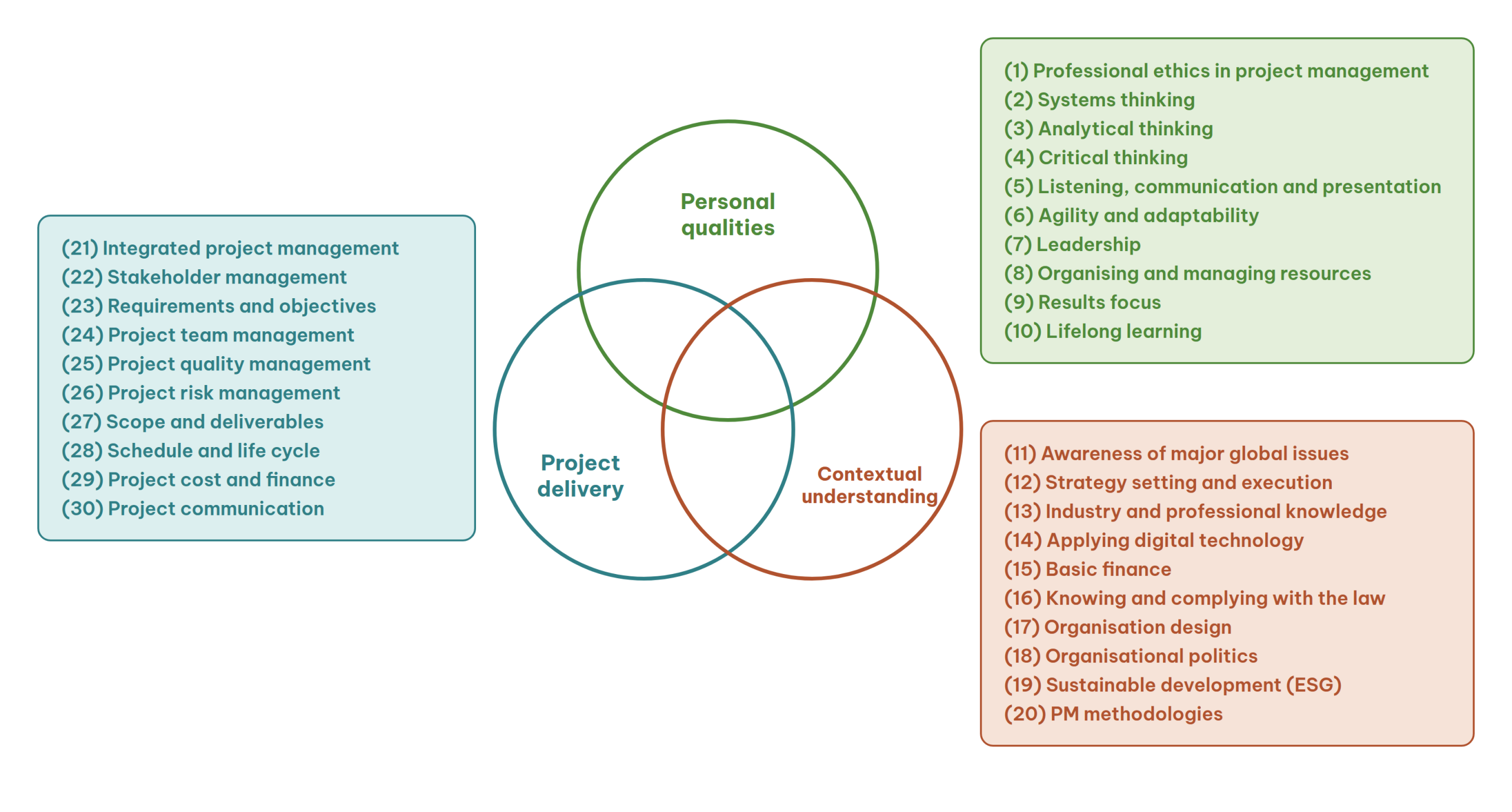
Figure 9.1. Three competence groups and their competency units.
Group 1 – Personal qualities
| Competency unit | What it looks like |
| (1) Professional ethics | Knows the standards of responsibility, respect, fairness and integrity; reasons ethically, applying 10 intellectual standards to 8 elements of thought; cultivates self from thought to decision. |
| (2) Systems thinking | Sees the whole and patterns of change; uses fishbone diagrams, the iceberg model, trend charts, causal loops. |
| (3) Analytical thinking | Identifies and analyses information from many sources, anticipates situations, offers timely solutions. |
| (4) Critical thinking | Evaluates sharply from many angles; examines one’s own and others’ reasoning and beliefs. |
| (5) Listening, communication, presentation | Listens and respects other views; adapts language and tone; presents clearly. |
| (6) Agility and adaptability | Spots change and opportunity quickly; ready to try new approaches. |
| (7) Leadership | Creates trust and collaboration; adapts leadership style to context; develops staff. |
| (8) Organising and managing resources | Organises work systematically; prioritises and allocates resources well. |
| (9) Results focus | Sets short- and long-term goals, meets standards and deadlines, prevents obstacles proactively. |
| (10) Lifelong learning | Knows own strengths and weaknesses; identifies future competence needs; learns proactively. |
Group 2 – Contextual understanding
| Competency unit | What it looks like |
| (11) Global issues | Tracks national, regional and international policies and commitments affecting the project; shares them in the organisation. |
| (12) Strategy setting and execution | Understands strategy formulation; knows projects may be adjusted, reprioritised or cancelled as strategy changes. |
| (13) Industry and profession | Follows the main trends in the project’s industry and profession. |
| (14) Digital technology | Proposes and builds processes for applying digital technology on projects. |
| (15) Finance basics | Understands financial systems and funding methods; interprets accounting data to compare options. |
| (16) Law | Identifies legal requirements for the project and contracts; analyses product and professional liability. |
| (17) Organisation design | Knows the principles: strategy-led, systems thinking, future-oriented, dialogue-based, continuous. |
| (18) Organisational politics | Understands influence and relationships; uses them ethically for common goals. |
| (19) Sustainability (ESG) | Understands and complies with environmental, social and governance requirements across the life cycle. |
| (20) PM methodologies | Understands traditional, agile and complex methods; chooses the right one for the project and each phase. |
Group 3 – Project delivery
| Competency unit | What it looks like |
| (21) Integrated project management | Plans, directs, monitors and closes the project; captures lessons at every phase. |
| (22) Stakeholders | Identifies priority relationships, has a strategy for each, builds lasting relationships. |
| (23) Requirements and objectives | Gathers, documents and agrees requirements; assesses compliance. |
| (24) Project team | Understands HR management; coaches and develops the team. |
| (25) Quality | Builds a quality management system (e.g. ISO 9001); controls quality of work and deliverables. |
| (26) Risk | Qualitative and quantitative analysis; responds to threats (avoid, mitigate, transfer, share, accept) and exploits opportunities. |
| (27) Scope and deliverables | Defines scope and boundaries and controls them through the life cycle. |
| (28) Schedule and life cycle | Chooses a life-cycle model; plans and manages the schedule for each phase. |
| (29) Cost and finance | Estimates and assesses cost; analyses financing options and models. |
| (30) Communication | PM information systems; communication plans; handling communication incidents. |
The framework is indicative. Each organisation should build one to match its maturity, technology, vision and talent strategy.
SELF-ASSESSMENT FORM
Self-assessment of 30 competency units
Score each competency: 0 not yet · 1 basic · 2 solid · 3 proficient. Results are stored only in your browser.
| Criterion | 0 | 1 | 2 | 3 |
| PERSONAL QUALITIES | ||||
| (1) Professional ethics in project management | ☐ | ☐ | ☐ | ☐ |
| (2) Systems thinking | ☐ | ☐ | ☐ | ☐ |
| (3) Analytical thinking | ☐ | ☐ | ☐ | ☐ |
| (4) Critical thinking | ☐ | ☐ | ☐ | ☐ |
| (5) Listening, communication and presentation | ☐ | ☐ | ☐ | ☐ |
| (6) Agility and adaptability | ☐ | ☐ | ☐ | ☐ |
| (7) Leadership | ☐ | ☐ | ☐ | ☐ |
| (8) Organising and managing resources | ☐ | ☐ | ☐ | ☐ |
| (9) Results focus | ☐ | ☐ | ☐ | ☐ |
| (10) Lifelong learning | ☐ | ☐ | ☐ | ☐ |
| CONTEXTUAL UNDERSTANDING | ||||
| (11) Awareness of major global issues | ☐ | ☐ | ☐ | ☐ |
| (12) Strategy setting and execution | ☐ | ☐ | ☐ | ☐ |
| (13) Industry and professional knowledge | ☐ | ☐ | ☐ | ☐ |
| (14) Applying digital technology | ☐ | ☐ | ☐ | ☐ |
| (15) Basic finance | ☐ | ☐ | ☐ | ☐ |
| (16) Knowing and complying with the law | ☐ | ☐ | ☐ | ☐ |
| (17) Organisation design | ☐ | ☐ | ☐ | ☐ |
| (18) Organisational politics | ☐ | ☐ | ☐ | ☐ |
| (19) Sustainable development (ESG) | ☐ | ☐ | ☐ | ☐ |
| (20) PM methodologies | ☐ | ☐ | ☐ | ☐ |
| PROJECT DELIVERY | ||||
| (21) Integrated project management | ☐ | ☐ | ☐ | ☐ |
| (22) Stakeholder management | ☐ | ☐ | ☐ | ☐ |
| (23) Requirements and objectives | ☐ | ☐ | ☐ | ☐ |
| (24) Project team management | ☐ | ☐ | ☐ | ☐ |
| (25) Project quality management | ☐ | ☐ | ☐ | ☐ |
| (26) Project risk management | ☐ | ☐ | ☐ | ☐ |
| (27) Scope and deliverables | ☐ | ☐ | ☐ | ☐ |
| (28) Schedule and life cycle | ☐ | ☐ | ☐ | ☐ |
| (29) Project cost and finance | ☐ | ☐ | ☐ | ☐ |
| (30) Project communication | ☐ | ☐ | ☐ | ☐ |
Scoring: add the scores in each group and divide by the maximum (number of criteria × 3). 70% or more: good; 45–69%: needs improvement; below 45%: priority for action.
Book knowledge and working knowledge
Today there are many ways to learn: classroom courses with certificates, online courses, eLearning, professional associations, conferences, self-study of books and standards, or learning with the help of artificial intelligence. But knowledge that is learned and never applied remains mere “book knowledge”.
We have all come back from a course full of good ideas, only for the wish to apply them to fade against our own inertia, old habits, a siloed environment or a manager who does not want change.
In his book Chuyện trò (Conversations), Cao Huy Thuần distinguishes two kinds of knowledge:
| BOOK KNOWLEDGE · KIẾN THỨC SUÔNG
Expressed in words Stored in memory by repetition, nothing added or removed. Isolated and stuck in one field; faced with surprise it “scatters like a routed army”. Good for one thing only. |
WORKING KNOWLEDGE · KIẾN THỨC LÀM
Expressed in action Practised to get better every day, like chess: the more you play, the stronger you get. It transfers and adapts to new situations; once you absorb one piece of working knowledge, you absorb others more easily. Useful for a hundred things. |
Be a lamp unto yourself
The same essay leads to a third kind: living knowledge (kiến thức sống). As in archery, the real target is not the distant circle but oneself: learning to harmonise body and mind. Then working knowledge becomes living knowledge. The Vietnamese saying “travel a day, gain a basket of wisdom” describes this self-teaching, through which we shape our own character from lived experience.
- Book knowledge: The essential foundation. Without it we work from habit or instinct.
- Working knowledge: Built through daily experience, shared with colleagues, distilled into lessons.
- Living knowledge: Practised to mastery, forming a self with its own identity, living fully with the project.
Choosing what to learn
- Use the competency framework to identify your own gaps in knowledge and skills.
- Pick the form of learning that fills exactly those gaps.
- Avoid scattered learning: wanting to learn everything without knowing why.
- Avoid chasing certificates: it wastes your effort and your organisation’s money.
- Learn in order to do the right work and do the work right, raising the effectiveness of yourself and your organisation.
Apply it to your project
| A SIX-MONTH PERSONAL DEVELOPMENT PLAN
☐ I have assessed all 30 competencies and chosen at most three priorities. ☐ Each priority has a specific form of learning and a real task to apply it to immediately. ☐ I have asked my manager or a mentor to review my self-assessment independently. ☐ I have scheduled a reassessment in six months. |
Reflection questions
| FOR INDIVIDUAL REFLECTION OR GROUP DISCUSSION
1. Which three competency units did you score lowest? Which form of learning would improve them best over the next six months? 2. Think of a recent course. How much of it have you actually applied? What got in the way? 3. Are you studying for something only because “others have that certificate”? |
Quick check
Question 1. The three groups in the project management competency framework are:
- Technical, financial, legal
- Personal qualities, contextual understanding, project delivery
- Leaders, managers, staff
- Knowledge, skills, certificates
Question 2. Which group does “understanding organisational politics” belong to, and how should it be used?
- Personal qualities; to get promoted faster
- Contextual understanding; ethically, for the project’s common goals
- Project delivery; to control subordinates
- It is not in the framework
Question 3. Which feature belongs to “working knowledge”?
- Memorised through repetition
- Useful for one thing only
- Improves with practice and transfers to new situations
- Needs no book knowledge as a base
Answers and explanations
Question 1: B. The framework has 10 personal-quality units, 10 contextual units and 10 project-delivery units.
Question 2: B. It is unit (18) in the contextual group and must be used ethically.
Question 3: C. Working knowledge is practised, improves over time and adapts to new situations.
Key points
| THE ESSENTIALS OF THIS LESSON
• Competence is the measurable combination of knowledge, skills, attitudes and experience needed to do a job well. • A competency framework is the basis for selecting the right people, developing them, and for each of us to examine our strengths and weaknesses. • Three groups, 30 units: 10 personal qualities, 10 contextual understanding, 10 project delivery. The framework is indicative; each organisation should adapt it. • Book knowledge is expressed in words; working knowledge is expressed in action, improves with practice and transfers to new situations; living knowledge is self-taught through experience and shapes character. • Learn selectively and in order to apply; avoid scattered learning and chasing certificates. |
This lesson is adapted from Chapter 9 of Quản lý dự án: Hiểu đúng & Làm thật (“Project Management: True Understanding, Genuine Action”) by Truong Van Thien (Construction Publishing House, Hanoi, 2025). The content has been condensed and reorganised for learning; full data, quotations and references are in the book.