


PART 5 · BUILDING THE ORGANISATION
Lesson 10. Designing the project organisation
Reading time ≈ 22 min · Based on Chapter 10 of the book
Once the Way and virtue are clear, next come benevolence and righteousness; once those are clear, next come office and duty;
once those are clear, next come form and title; once those are clear, next comes placement.
— Zhuangzi
| LEARNING OBJECTIVES
After this lesson you will be able to: • Apply Jim Collins’ “Good to Great” framework to building a project organisation. • Understand organisation design through “hard” and “soft” elements and the 7-S and Star models. • Set up the four-level model and five areas of delegated authority for the project organisation. • Find the “hedgehog concept” for your own organisation. • See how BIM (ISO 19650) and AI can raise organisational effectiveness, and the ethical limits on AI use. |
Jim Collins wrote: “Good is the enemy of great.” Most companies never become great precisely because they are already quite good. This lesson and the next two apply that idea to building an excellent project organisation.
The “Good to Great” framework
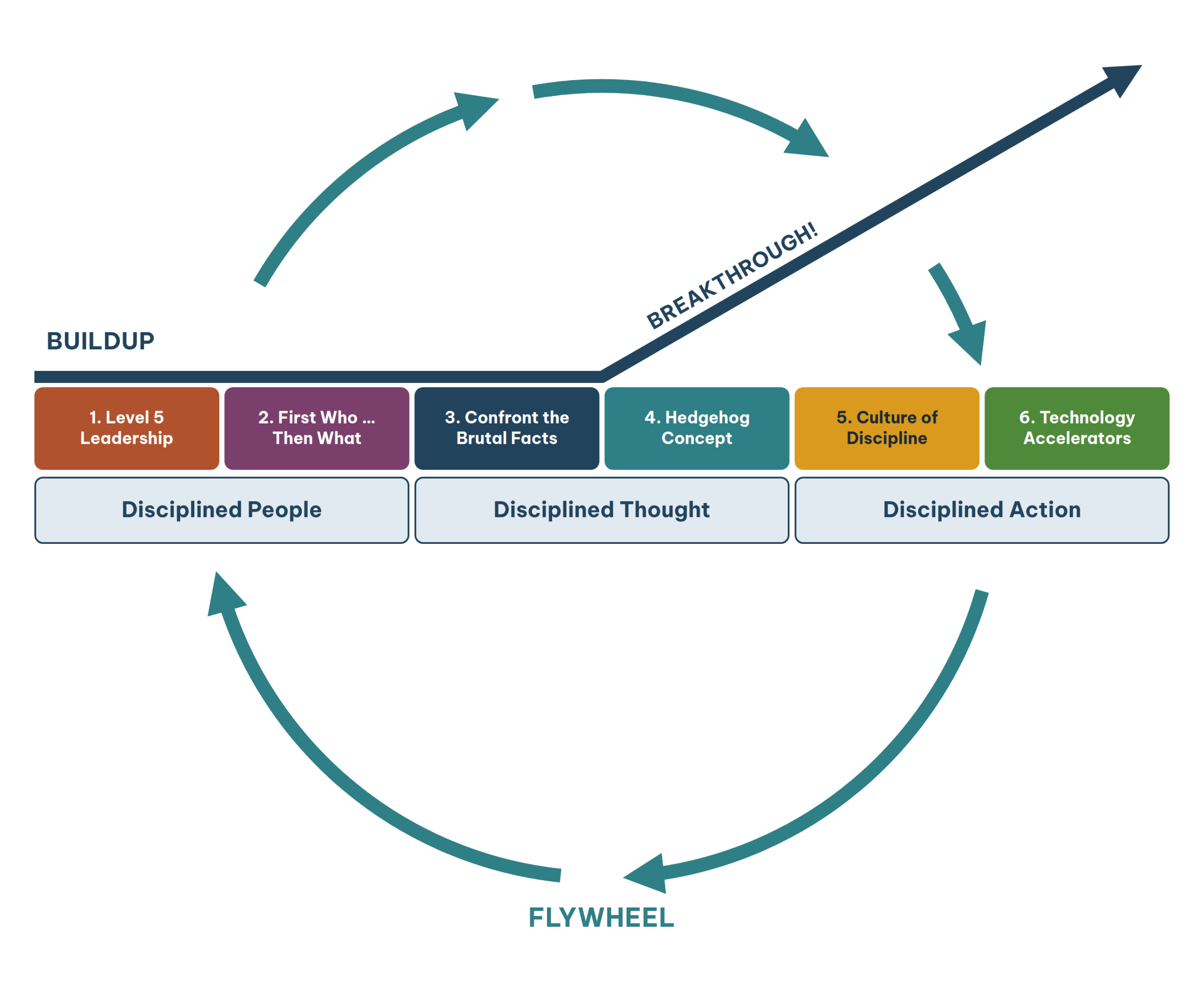
Figure 10.1. Jim Collins’ framework for moving a company from good to great.
| Level 5 leadership
Humble, calm and composed, yet fiercely decisive. |
First who, then what
Get the right people in the right seats, then set direction and strategy. |
Confront the brutal facts
Yet never lose faith. |
| The hedgehog concept
Where passion, strength and economic engine meet. |
Culture of discipline
Disciplined people, disciplined thought, disciplined action. |
Technology accelerators
Choose technology through the hedgehog concept, not by fashion. |
| The flywheel
Push step by step in one direction until momentum builds to breakthrough. |
What is organisation design?
A project organisation is a purposeful social entity with system properties, connected to its external environment.
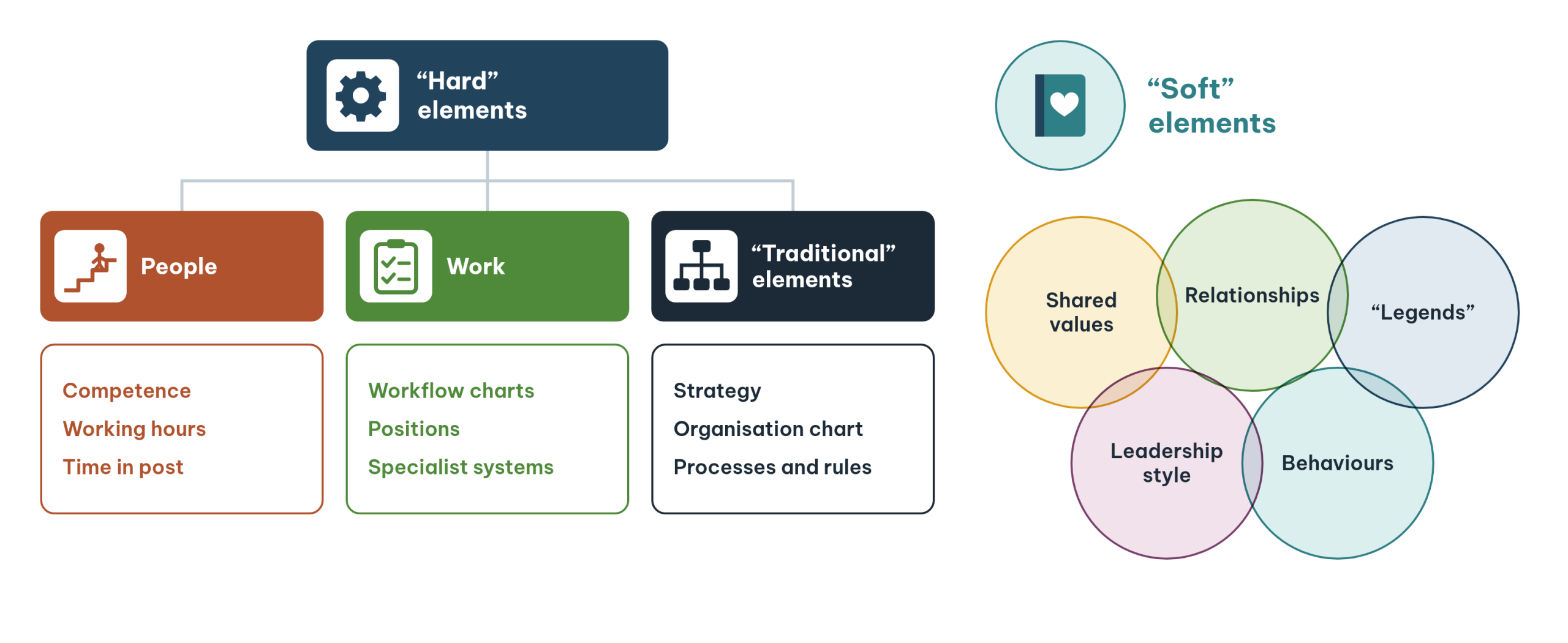
Figure 10.2. “Hard” elements (people, work, organisation charts, rules) and “soft” elements (shared values, leadership style, relationships).
| DEFINITION
Organisation design is the deliberate arrangement of people, work and the “traditional” elements of an organisation, in the light of its “soft” elements, to achieve strategy and purpose effectively and efficiently. |
Two widely used system models are 7-S (McKinsey) and Star (Galbraith). The main elements follow.
Strategy
- Strategy is the long-term plan to realise vision and mission through projects.
- Good strategy selects and prioritises projects; only those that fit strategic goals and can create value are chosen.
- Project results and lessons feed back into strategy: success reinforces it, failure calls for adjustment.
- Projects may be adjusted, reprioritised, deferred or stopped according to performance or changing strategy.
Structure and delegation
Clear levels create a consistent chain of accountability and avoid issues being “pushed up and sent back down” month after month with no one taking responsibility.
| Level | Role | Focus |
| 1 | Organisation leadership | Link strategy with project investment and benefits; optimise capital and resource allocation. |
| 2 | Project governance (sponsorship) | As level 1; delegate strongly and give level 3 autonomy. |
| 3 | Project management organisation | Autonomously manage and run the project to meet strategic goals. |
| 4 | Execution | Carry out project work as required by the management level. |
Five areas to consider delegating to the project organisation:
- Interfaces with functional units in the organisation.
- Contracts with external parties: from selection and signing to execution, acceptance and close-out.
- Project finance: arranging funding, managing its use, final accounts.
- Human resources: recruitment, appointment, assignment, appraisal, rewards.
- Stakeholders across the life cycle: identify, rank, engage, monitor and adjust.
A culture of collaboration and empathy
Projects today unfold in an environment marked by “impermanence”: fast, deep change and fragility; a mix of true and false information; many interacting factors forming complex systems; and situations beyond our expertise where cause and effect are unclear. Organisations need a culture that encourages positive thinking and new ideas, keeps information transparent, stays nimble enough to “know when to advance and when to retreat”, and learns with humility.
You must never confuse faith that you will prevail in the end, which you can never afford to lose, with the discipline to confront the most brutal facts of your current reality, whatever they might be.
— The Stockdale paradox
The three circles of the hedgehog
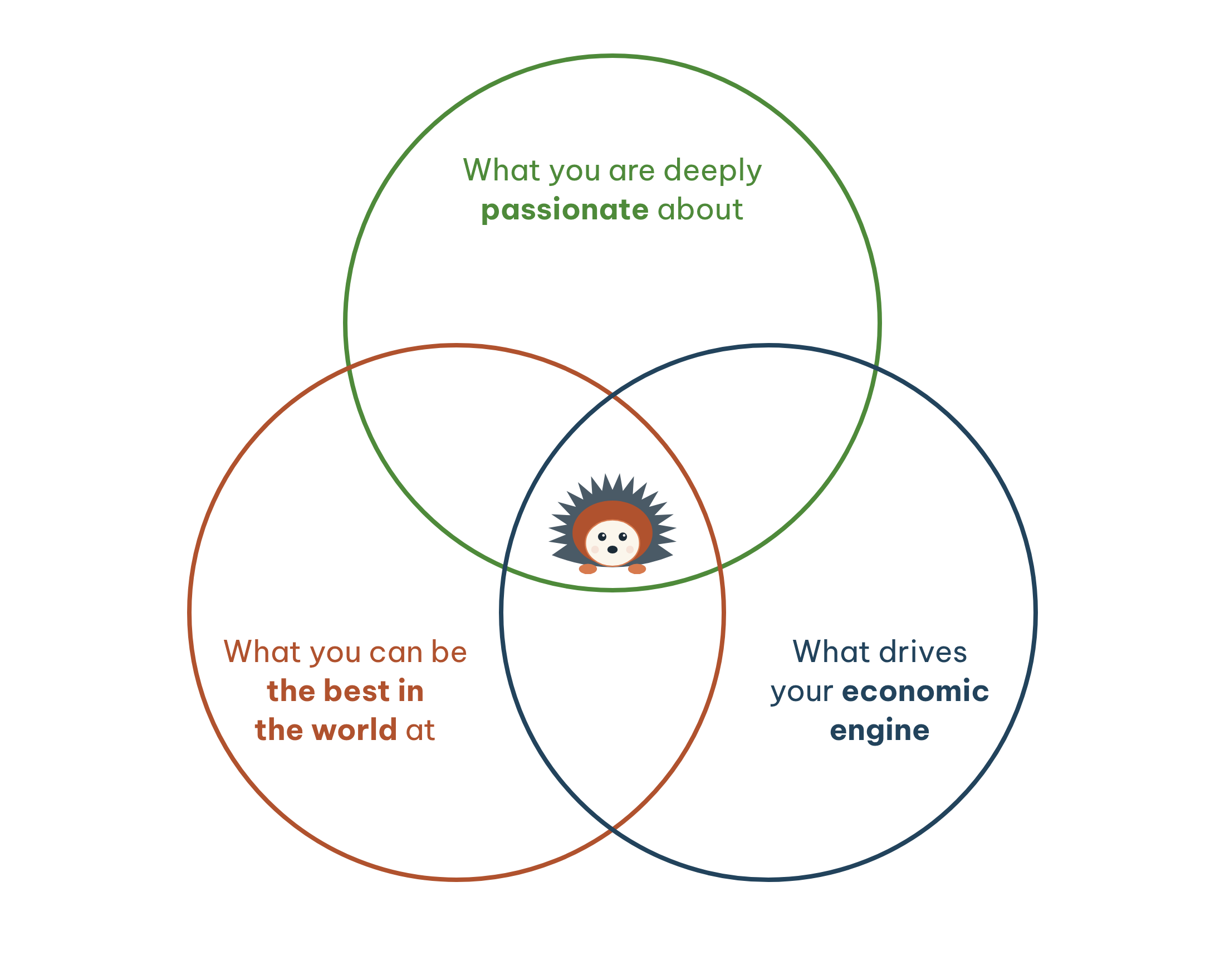
Figure 10.3. “The fox knows many things, but the hedgehog knows one big thing.” (Labels in Vietnamese.)
The project leader guides the team to answer three questions:
| CIRCLE 1
What can we be best at? Based on the capability, experience and character of key people and the organisation’s strengths. For example: the most effective operating model, the best at digital solutions, the most incorruptible. |
CIRCLE 2
What are we most passionate about? A passion for service, for the craft of projects, for technology… and what kindles that passion. |
CIRCLE 3
What drives our “benefit engine”? Delivering the product, value for the business, or benefit to the economy and the nation. This is the compass when a “black swan” strikes. |
Digital technology in the project organisation
Managing project knowledge with BIM
Design knowledge (who the design is for, what it does, who does it, how, why, how it evolves…) accumulates through the life cycle but leaks away at each phase transition, or whenever the owner, contractor or key staff change.
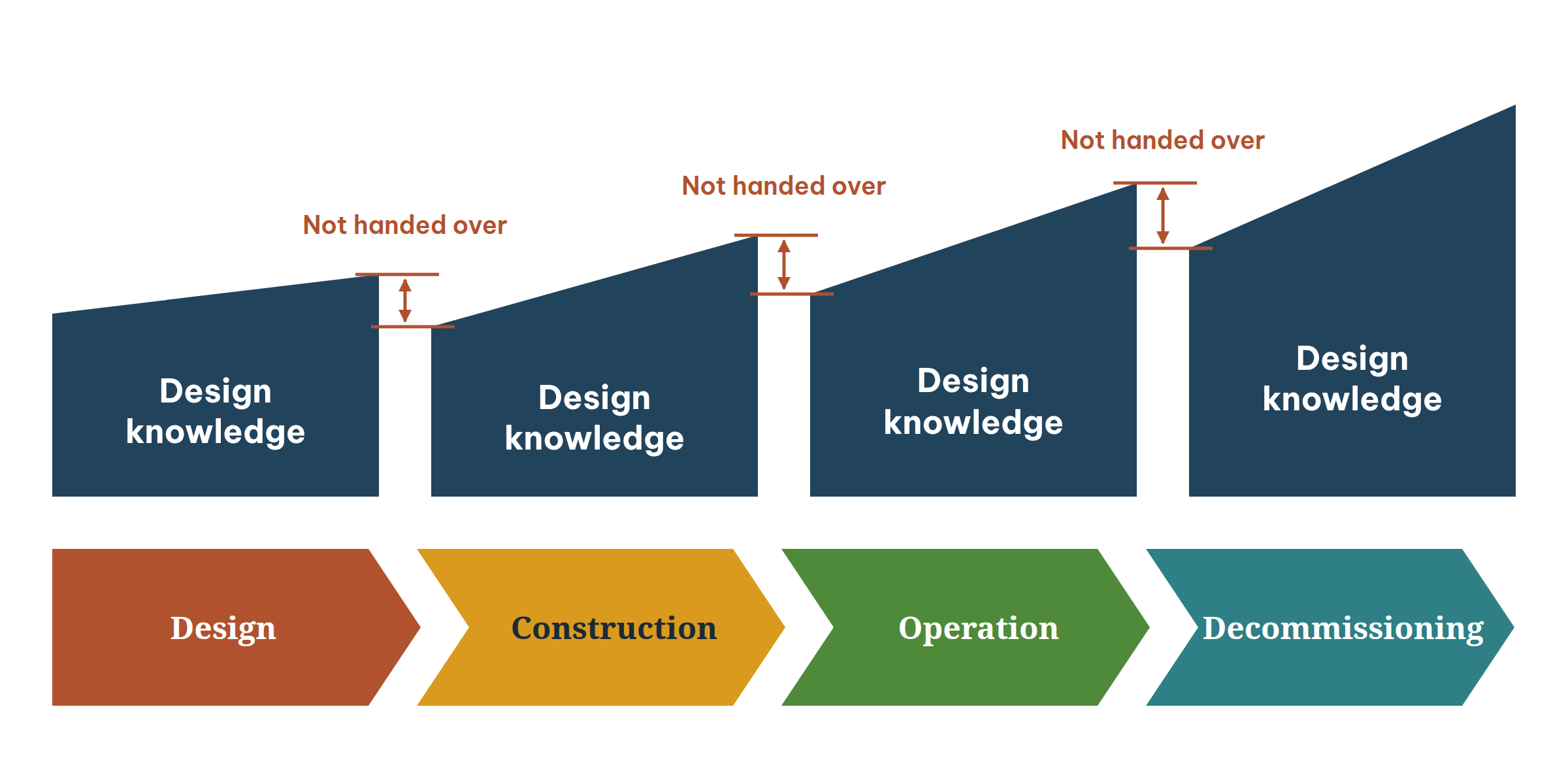
Figure 10.6. Design knowledge handed over across the project life cycle.
The ISO 19650 series defines BIM as the use of a shared digital representation of a built asset to facilitate design, construction and operation and to form a reliable basis for decisions. At handover, information passes from the Project Information Model (PIM) to the Asset Information Model (AIM). Organisations should choose a suitable information model at the outset and set collaboration rules for all parties.
Applying AI
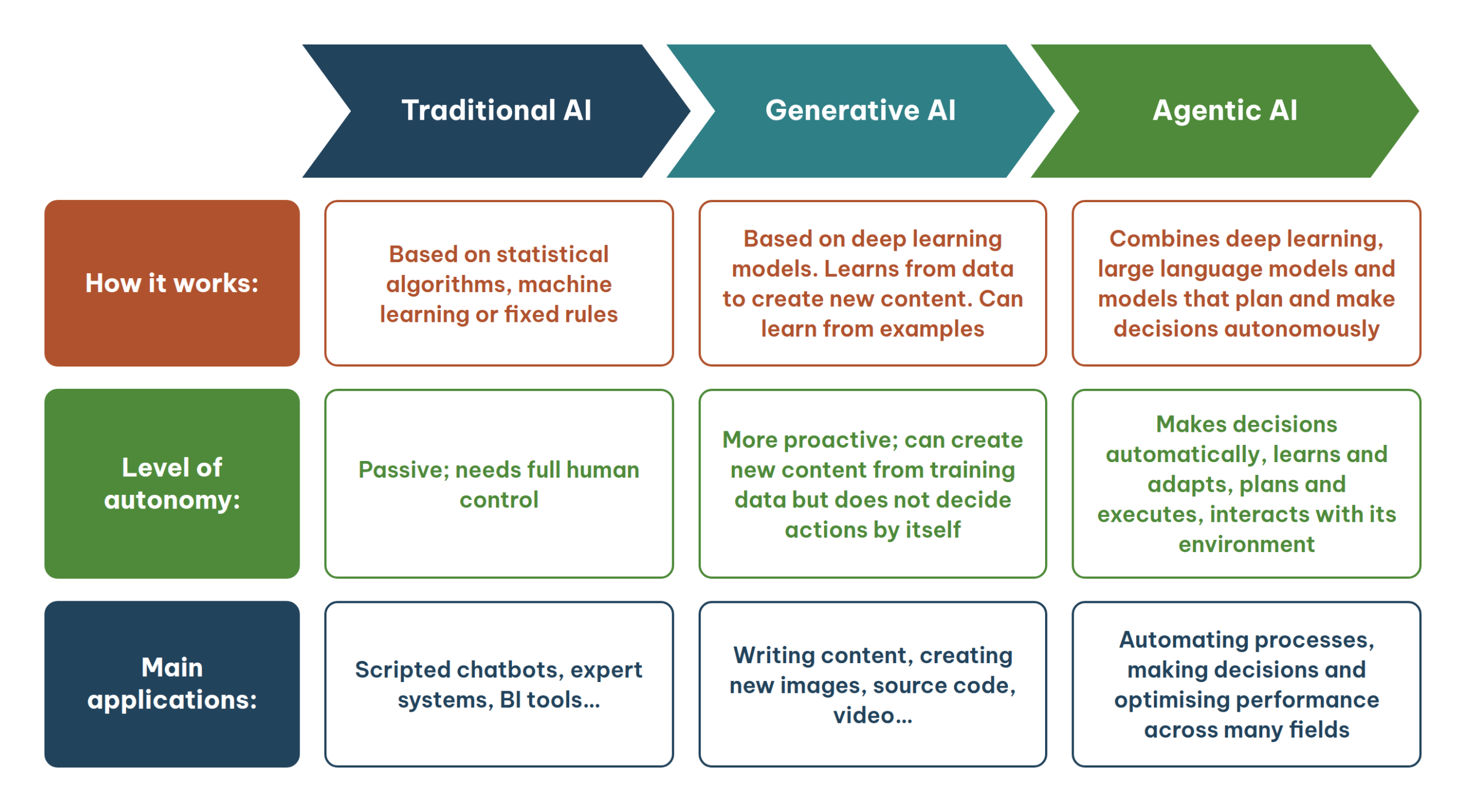
Figure 10.9. Characteristics of today’s AI, from generative AI to agentic AI.
| Objectives and planning
Analyse data, simulate scenarios; build Gantt charts and critical paths, warn of slipping milestones. |
Risk and cost
Analyse trends, propose responses, forecast cost movements. |
Human resources
Optimise allocation by competence and availability. |
| Reporting and communication
Generate reports, summarise meetings, handle email, suggest actions. |
Contracts and site monitoring
Summarise contracts and extract data; analyse site images and compare against the schedule. |
| AN ETHICAL FRAMEWORK FOR AI
• Establish an ethical framework, AI controls and clear accountability. • Do not use AI where the ethical issues cannot yet be foreseen. • Do not use confidential, sensitive or restricted data to train AI. • Do not use AI where traditional techniques are more suitable. • Consider risks from third parties supplying data or AI technology. Before deploying, assess the AI team’s capability, hardware and data infrastructure, processes and budget. |
Apply it to your project
| CHECK YOUR ORGANISATION DESIGN
☐ A written four-level structure sets clear limits of authority. ☐ The project organisation has delegated authority in all five areas. ☐ The team has discussed and agreed its “hedgehog concept”. ☐ An information-management model (BIM or equivalent) and data-sharing rules have been chosen. ☐ There are rules for AI use: permitted data, who is accountable, how results are verified. |
Reflection questions
| FOR INDIVIDUAL REFLECTION OR GROUP DISCUSSION
1. How many times was a recent issue on your project “pushed up and sent back down” before a decision? Which level should have been empowered? 2. What are the three hedgehog circles of your organisation? Do they intersect? 3. If you use AI to summarise contracts or reports, does your organisation have rules on sensitive data and accountability? |
Quick check
Question 1. In the four-level model, which level should be strongly empowered to run the project?
- Level 1 – Leadership
- Level 2 – Governance
- Level 3 – Project management organisation
- Level 4 – Execution
Question 2. What does the Stockdale paradox advise?
- Stay optimistic and ignore bad news
- Keep faith you will prevail while confronting brutal facts with discipline
- Trust only numbers
- Accept failure early
Question 3. Which should you NOT do when applying AI on projects?
- Define accountability
- Use confidential contract data to train a public AI
- Assess data infrastructure before deploying
- Use AI to summarise meeting minutes
Answers and explanations
Question 1: C. Levels 1 and 2 focus on strategy and capital; level 3 has autonomy to manage delivery.
Question 2: B. Both must coexist: unshakeable faith and the discipline to face reality.
Question 3: B. Do not use confidential, sensitive or restricted data to train AI.
Key points
| THE ESSENTIALS OF THIS LESSON
• “Good is the enemy of great”: Level 5 leadership, first who then what, confront the brutal facts, the hedgehog concept, a culture of discipline, technology accelerators, the flywheel. • An organisation has “hard” elements (people, work, charts, rules) and “soft” ones (shared values, leadership style, relationships). • Four levels: leadership, governance, management, execution. Levels 1–2 focus on strategy and capital allocation and delegate strongly to level 3. • Five areas of delegation: interfaces with functional units, contracts, project finance, human resources, stakeholders. • The Stockdale paradox: never lose faith that you will prevail, while having the discipline to confront present reality. • BIM and AI should be chosen early, with rules for collaboration, an ethical framework and clear accountability. |
This lesson is adapted from Chapter 10 of Quản lý dự án: Hiểu đúng & Làm thật (“Project Management: True Understanding, Genuine Action”) by Truong Van Thien (Construction Publishing House, Hanoi, 2025). The content has been condensed and reorganised for learning; full data, quotations and references are in the book.