


Lessons from a National Mega‑Project 200 Years Ago
Truong Van Thien – PM Solutions Vietnam
Abstract
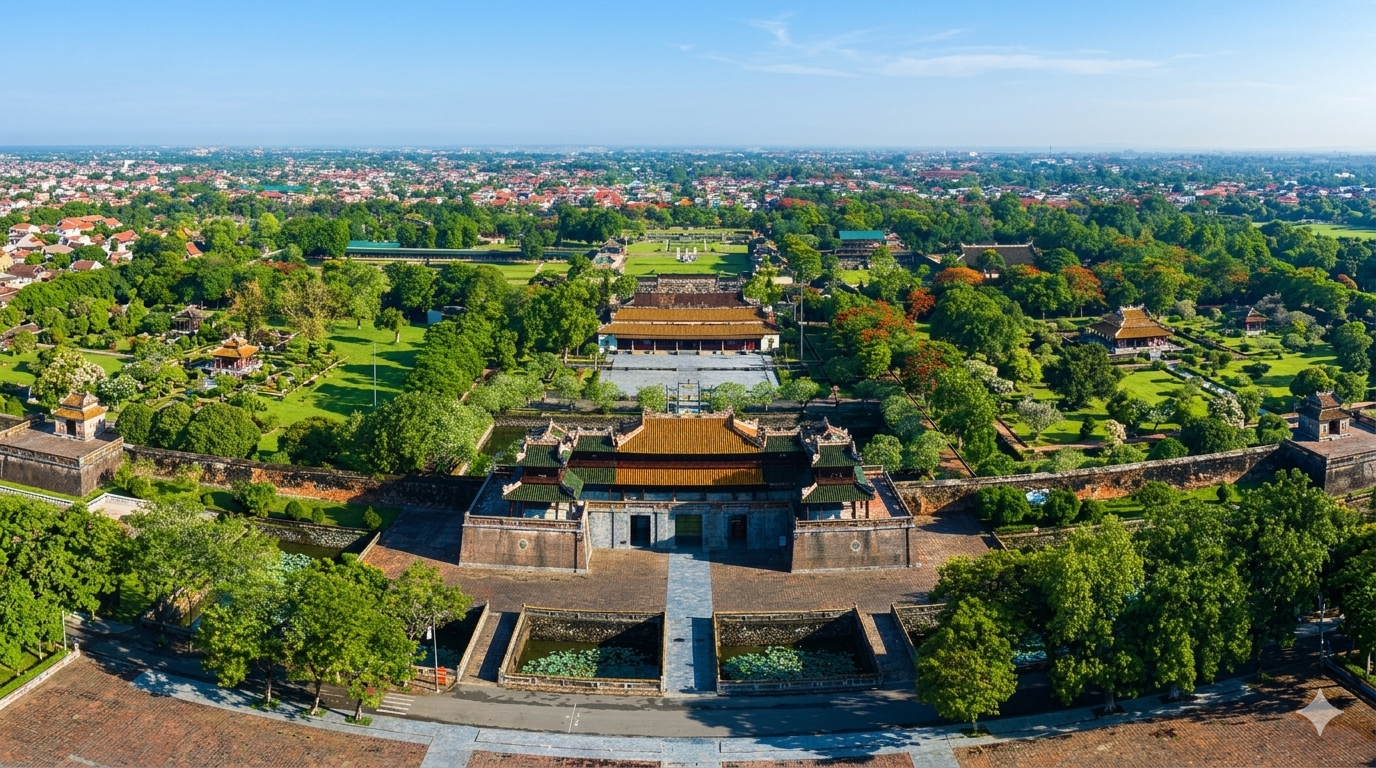
The Imperial City of Huế — a monumental royal architectural complex of the Nguyễn Dynasty, initiated in 1805 and completed in 1832 — is not only a UNESCO World Cultural Heritage site but also a rare example of a state‑level project executed with remarkable managerial sophistication. Based on an analysis of the Nguyễn Dynasty Woodblock Archives, particularly the Đại Nam Thực Lục (First and Second Chronicles), this article systematizes the project management principles applied by the Nguyễn court and compares them with ISO 21500:2021 and the PMBOK® Guide 8th Edition.
Findings show that many principles of modern project management were effectively practiced in Vietnam more than two centuries ago, offering valuable implications for contemporary PM education and practice.
1. Introduction
Modern project management is often considered a product of the 20th century, associated with the establishment of PMI (1969) and standards such as PMBOK®, PRINCE2®, and ISO 21500. However, history demonstrates that core PM principles — strategic vision, governance, planning, quality control, stakeholder engagement — were practiced in many ancient civilizations.
In Vietnam, the construction of the Imperial City of Huế (1805–1832) is a prime case study that has not been fully explored from a PM perspective. This national‑scale project spanned nearly 30 years, mobilized tens of thousands of workers, required complex cross‑regional coordination, and was governed through a multi‑tier administrative system.
The Nguyễn Dynasty Woodblocks — a UNESCO Memory of the World heritage (2009) — document this process in detail, enabling a modern PM analysis.
This article addresses two research questions:
(1) Which project management principles did the Nguyễn Dynasty apply in constructing the Imperial City of Huế?
(2) How do these principles align with ISO 21500:2021 and the PMBOK® Guide 8th Edition?
2. Research Methodology
This study employs qualitative document analysis combined with comparative analysis. Sources include:
- Đại Nam Thực Lục (First and Second Chronicles)
- Secondary historical literature on the Imperial City of Huế
- ISO 21500:2021 and PMBOK® Guide 8th Edition
The process includes extracting managerial events, categorizing them into PM domains, and comparing them with international standards.
3. The Story of Building the Imperial City of Huế
3.1. Vision and Site Survey (1803–1805)
After unifying the country, Emperor Gia Long established a long‑term strategic vision: building a durable capital “to last for countless generations.” He ordered a full survey of the Phú Xuân area: “He sent the superintendent Nguyễn Văn Yến to measure and mark the four sides outside the old Phú Xuân citadel for expansion.”
The court implemented a detailed compensation and resettlement policy: “Each household whose house was removed received 3 “quan”… the people were exempted from corvée labor.”
3.2. Mobilization and Construction (1805–1832)
In April 1805, the project officially began with more than 30,000 soldiers and laborers from Quảng Bình to Quy Nhơn. The Woodblocks record: “The four sides of the citadel measured 2,487 trượng 4 thước 7 tấc… with 10 gates.”
Workers were compensated: “Each person received 1 quan 5 per month and 1 phương 15 bát of rice.” The court also stationed medical teams at the construction sites.
3.3. Completion under Emperor Minh Mạng (1820–1832)
Emperor Minh Mạng continued the project with a clear philosophy of quality: “In all works, select the best materials and build firmly… toil once to enjoy peace for long.”
By 1832, the project was completed. The emperor reported: “From labor to materials, the total expenditure exceeded billions.”
4. Modern Project Management Principles Reflected in the Huế Citadel Project
4.1. Strategic Vision & Value Orientation
The Nguyễn Dynasty maintained a consistent long‑term vision across two reigns. This aligns with ISO 21500’s “Create Value” principle and PMBOK®’s Value Delivery Domain.
4.2. Multi‑Level Project Governance
The governance framework included five levels:
(1) Emperor – Project Sponsor
(2) Cabinet – Steering Committee
(3) Ministry of Public Works – PMO / Owner
(4) Construction Supervisors – Project Managers
(5) Guild Leaders – Package Managers
Communication flowed through imperial edicts (top‑down) and memorials (bottom‑up).
4.3. Systems Thinking & Master Planning
The geomantic survey functioned as a systems‑thinking site assessment. Detailed measurements and layouts were planned before construction — consistent with PMBOK®’s Planning Domain.
4.4. Stakeholder Management
The court identified all affected groups and applied tailored engagement strategies: compensation, tax exemptions, new farmland allocation, and relocation loans. This constitutes a complete Stakeholder Engagement Plan.
4.5. Resource & Financial Management
The project mobilized 30,000 workers organized by specialized guilds — equivalent to a modern Resource Breakdown Structure (RBS).
Fixed monthly wages formed a cost baseline, and the final expenditure report served as a cost performance summary.
4.6. Adaptive, Phased Delivery
The project followed two phases: earth‑rampart construction (1805–1818) and brick‑stone fortification (1818–1832). This reflects incremental delivery — a key PMBOK® principle.
4.7. Quality Management
The Nguyễn court implemented a two‑tier QA/QC system:
- Twice‑monthly inspections
- Quarterly audits by high‑ranking officials
The philosophy emphasized durability and total cost of ownership.
4.8. Risk Management
The court proactively addressed risks related to health, weather, natural disasters, and leadership transition — aligning with PMBOK®’s Uncertainty Domain.
5. Alignment with ISO 21500:2021 and PMBOK® 8th Edition
Findings show:
- 10 out of 12 PMBOK® 8th principles have clear evidence in the Huế project.
- All ISO 21500 principles correspond to documented practices.
This demonstrates the universality of effective PM principles across time and geography.
6. Conclusion & Practical Implications
The Imperial City of Huế exemplifies that Vietnamese practitioners applied modern‑equivalent project management principles more than 200 years ago. The project featured clear governance, rigorous quality control, structured stakeholder engagement, and adaptive execution.
Two key implications:
(1) Vietnam should develop indigenous PM case studies for training.
(2) Traditional Vietnamese management culture — emphasizing hierarchy, responsibility, and community — is a valuable asset for shaping a distinct national PM identity.
The story of Huế reminds us that sustainable project success stems not only from tools and techniques but from vision, disciplined governance, responsibility, and commitment to enduring quality.